CLIMB↗
Play in repetition.
A STUDY OF CIRCLES, SURFACES
AND CHANGING CONFIGURATIONS
01 / A DESIGN REFERENCE
Playful.
Repetitive.
Intentional.
Those three words appear on the project’s original Hall Haus reference board. The study looks at the meeting of street culture, sport and repeated geometric forms.
The Climb takes that research into an exploratory arrangement of perforated surfaces and projecting cylindrical elements. The reference is acknowledged as a starting point; the renders and model views on this page document the project’s own development.
02 / A REPEATING FIELD
Holes make
possibilities.
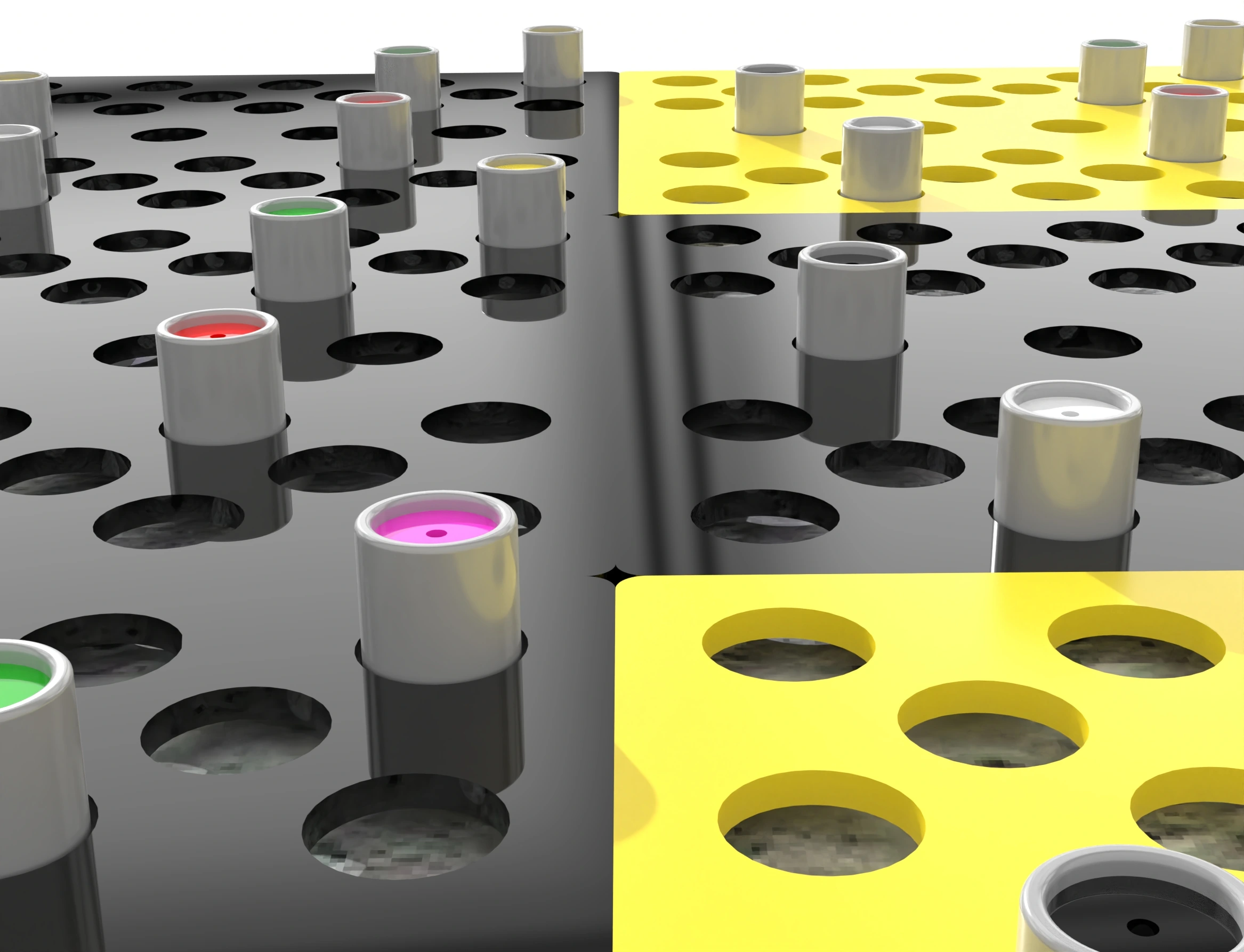
A field of circular openings gives the surface a repeatable order. The render places cylindrical elements among those openings, while yellow panels interrupt the grey ground and make groups readable.
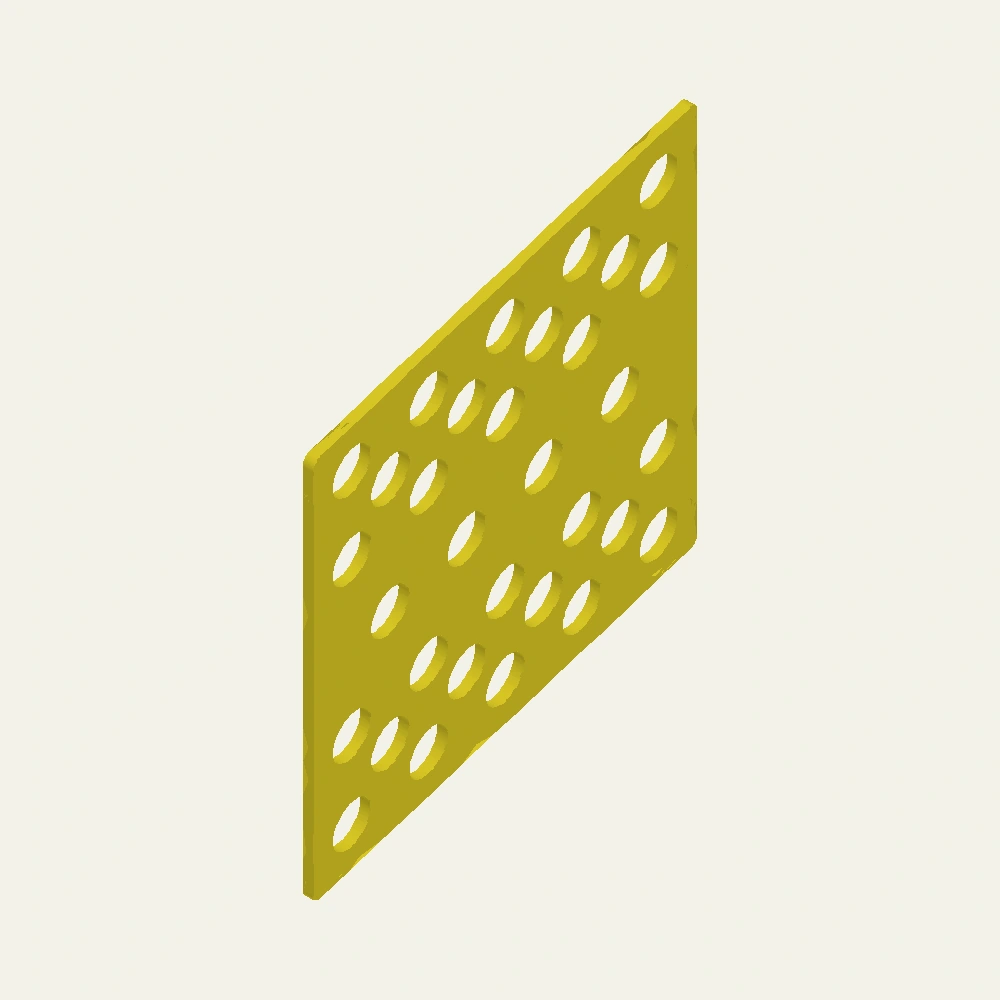
The field. Repeated openings organise the flat surface.
The interruption. Upright volumes add height to selected positions.
The grouping. Colour separates regions without changing the circular vocabulary.
Model view generated from the original project geometry. Display colour is used for readability.
Inside the repeating field
EDGE.
RIM.
VOID.
The same scene, closer: colour marks a region, while the circles alternate between openings and projecting volumes.
03 / MODEL VARIATIONS
A small
kit of parts.
The original model files include square plates with different combinations of protrusions and openings. Seen together, they show a family of repeated elements being explored through geometry.
PLAY WITH THE PATTERN
Choose a point.
Find a rhythm.
An interactive wall of 40 holds, inspired by the study’s repeating grid. Start anywhere, link points and build a longer route. Select a chosen hold again to remove it.
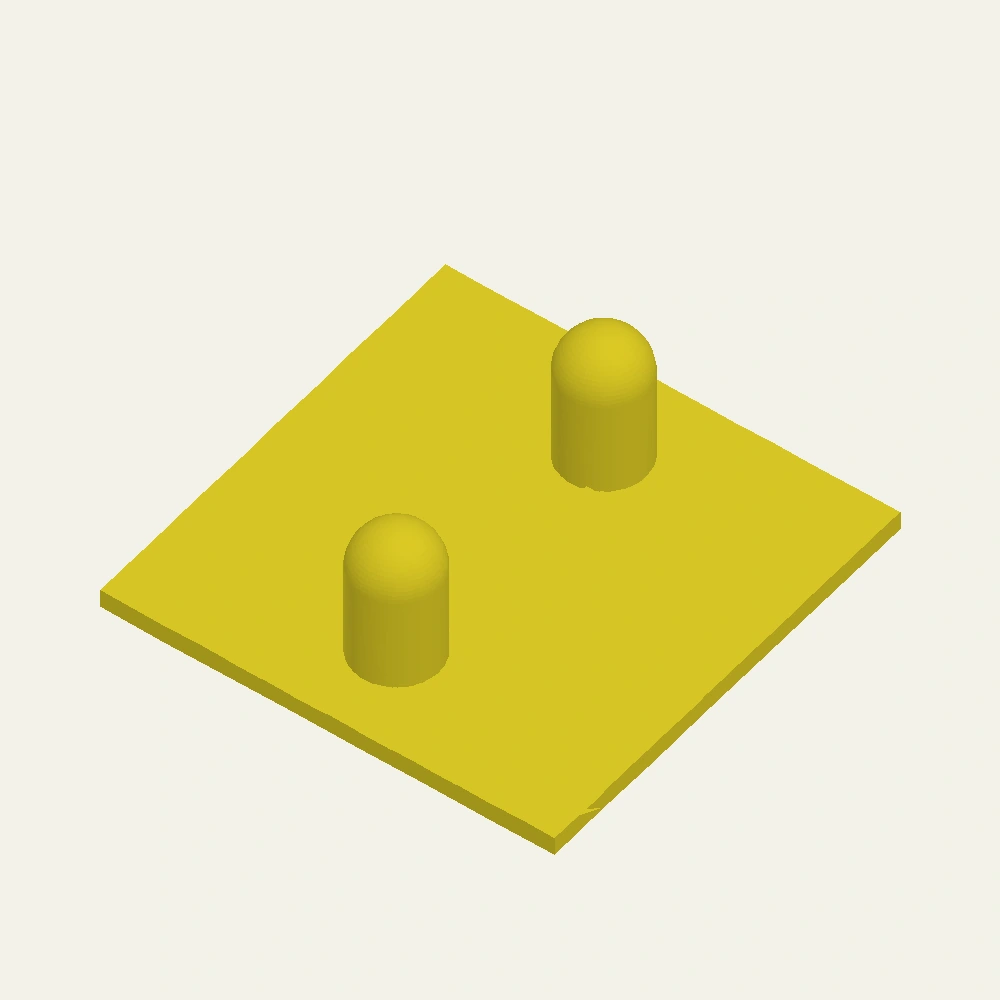
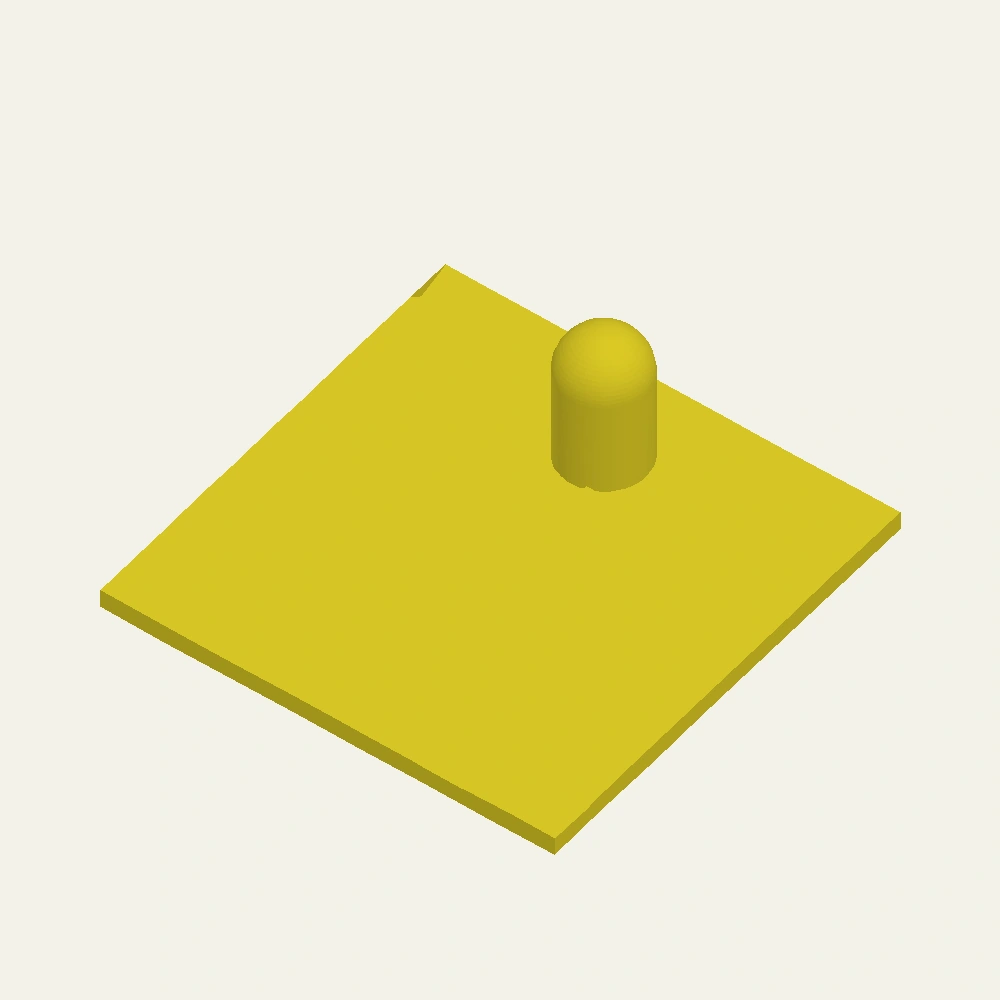
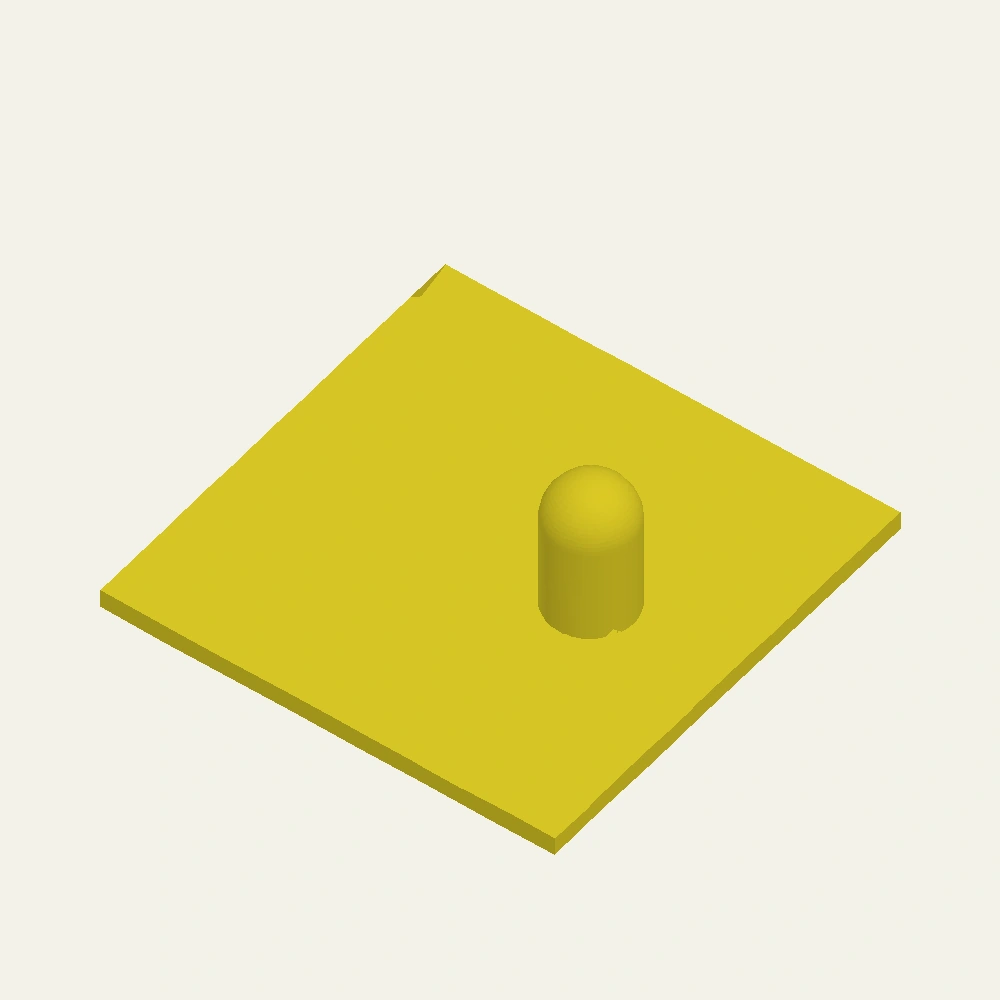
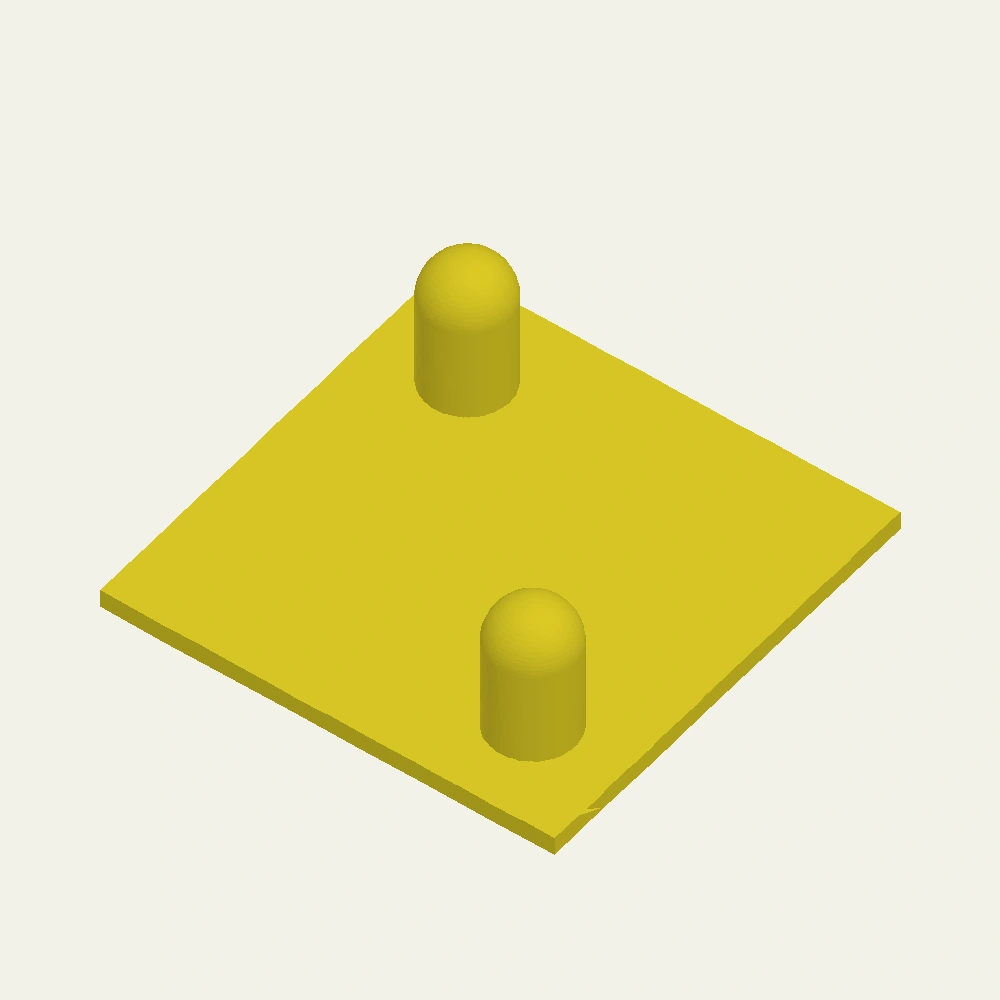
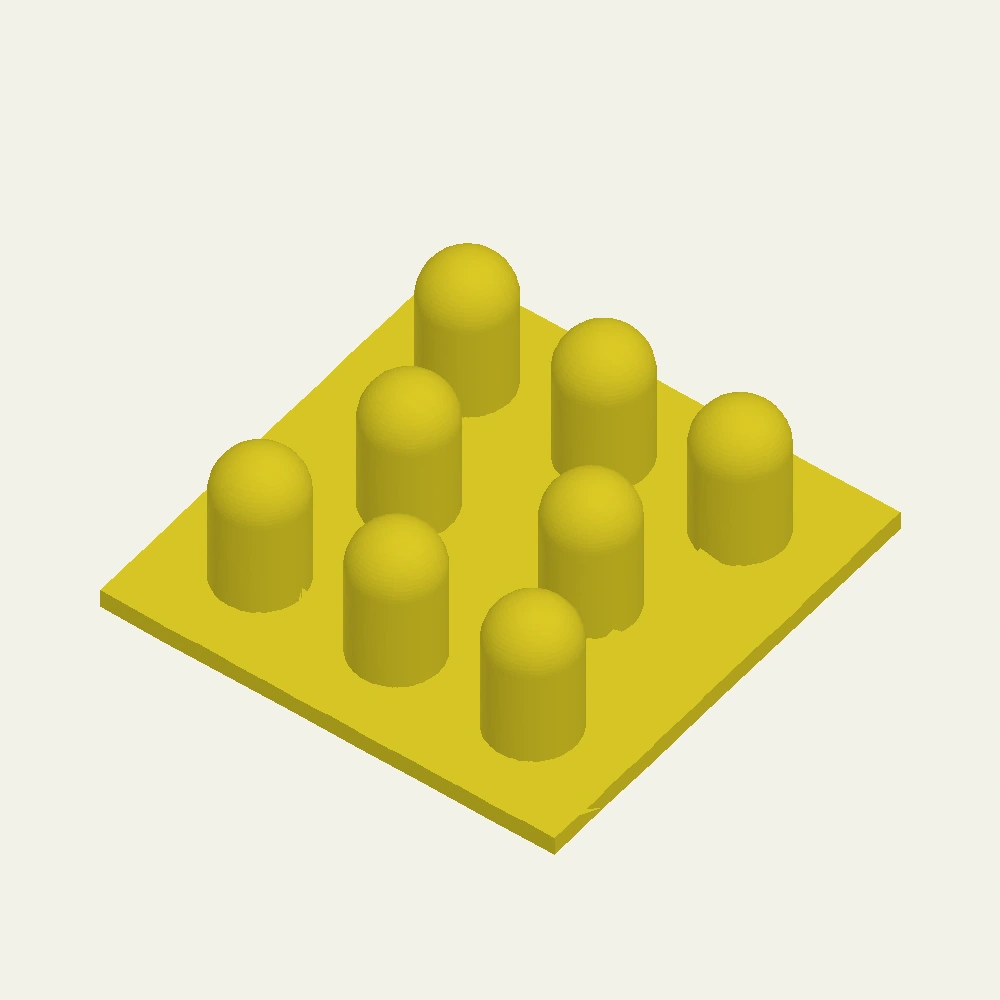
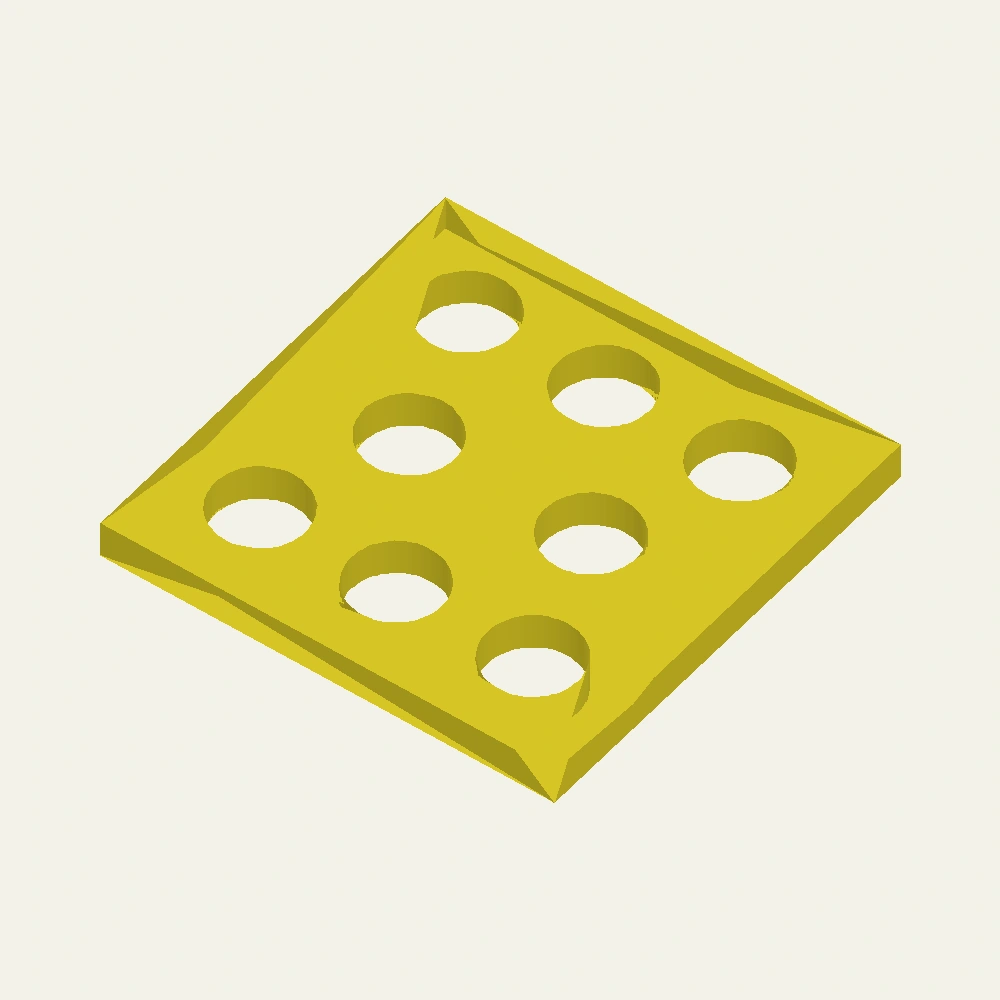
These are digital model studies, reconstructed directly from the original STL files. They are not photographs of physical prototypes.
Further prototype geometry
A circle can
cross an edge.
Three panel layouts from the model archive. Full openings and partial circles at the perimeter give each outline a different rhythm.


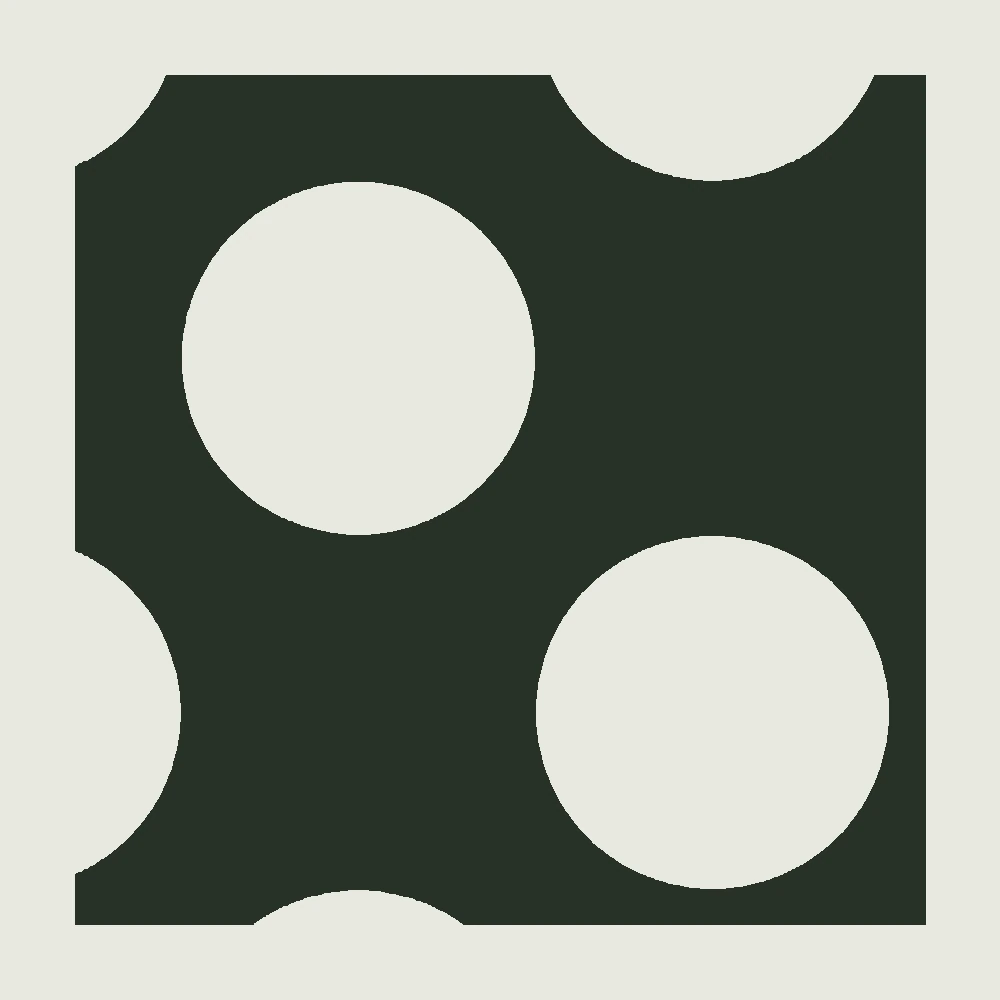
Face views generated directly from the original prototype geometry. Flat colour makes the cut-outs readable.
04 / CLOSE TO THE SURFACE
Flat becomes
tactile.
The visual study moves between recessed circles, hollow cylinders and solid surfaces. A small change in height or depth changes how the repeated pattern catches light and reads as an object.
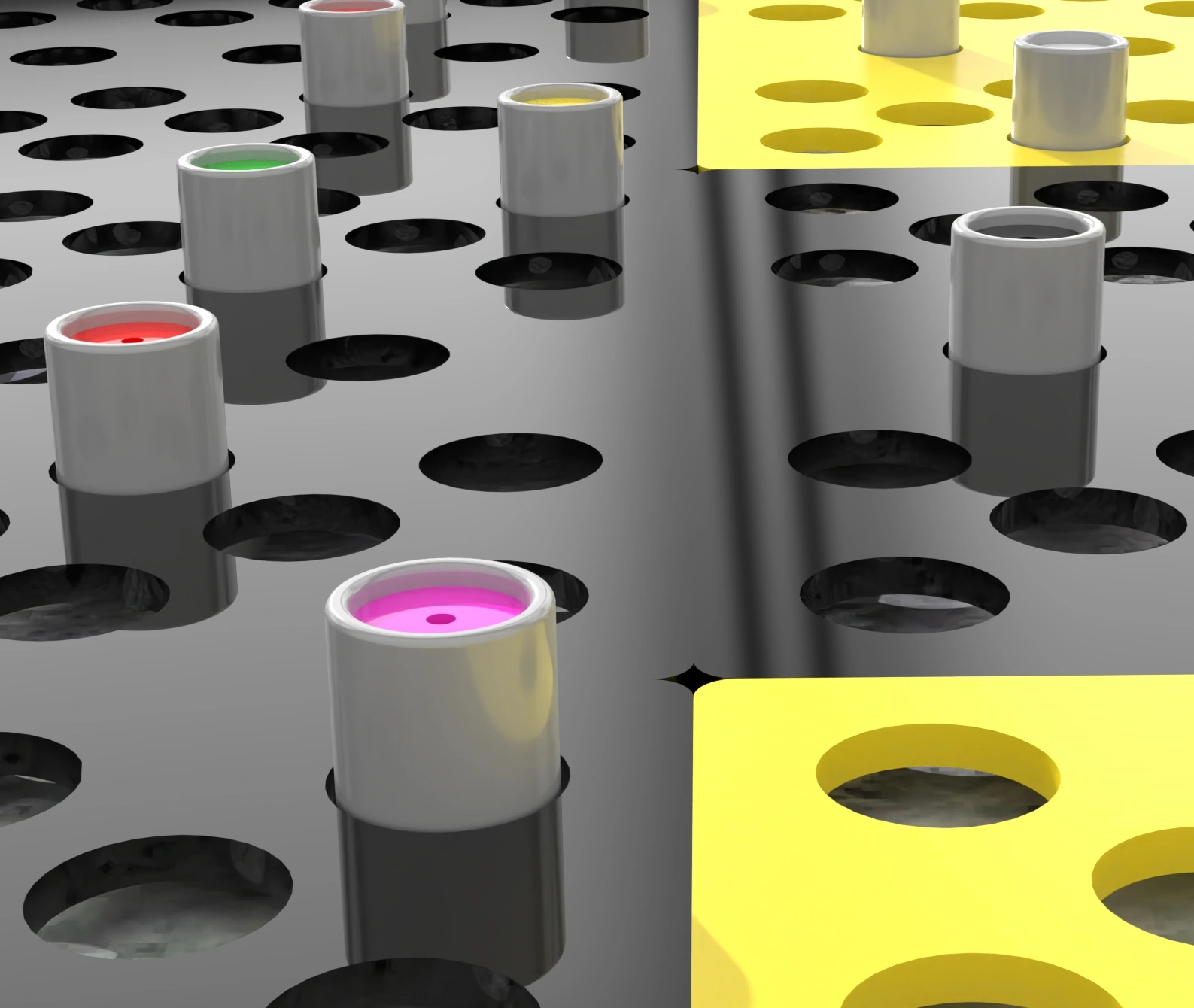
An exploration of a modular language for play.
The work is presented at the stage supported by its archive: reference research, CAD variation and one visual study. A final use scenario, physical testing and installation are not documented.