Mghallaf
Wrapped in rice.
Woven from tradition.
A rice project in two acts: a colorful first direction, abandoned at the last minute, and a final package developed through rice paper, weaving and physical prototypes.
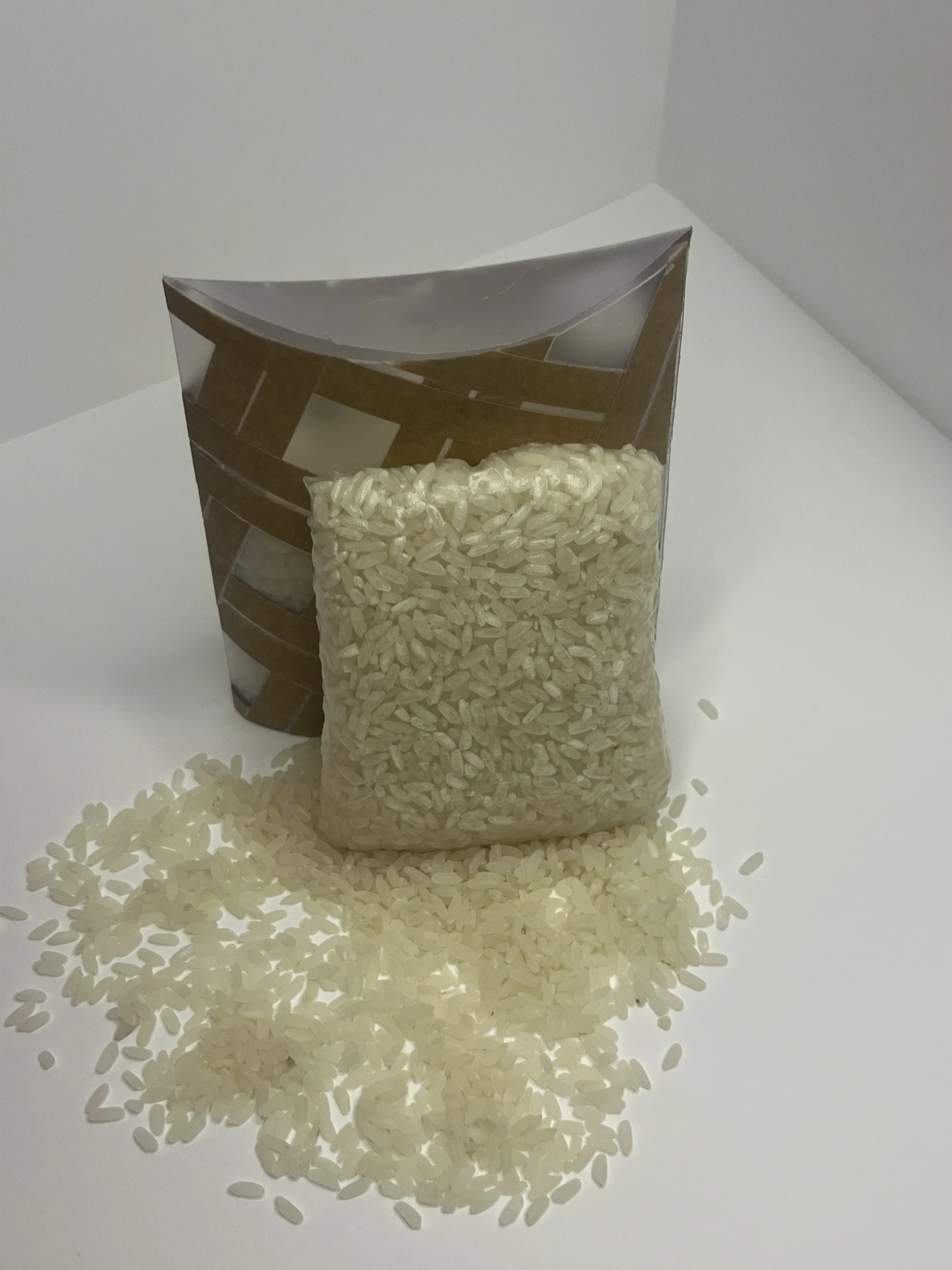
It all started
with rice.
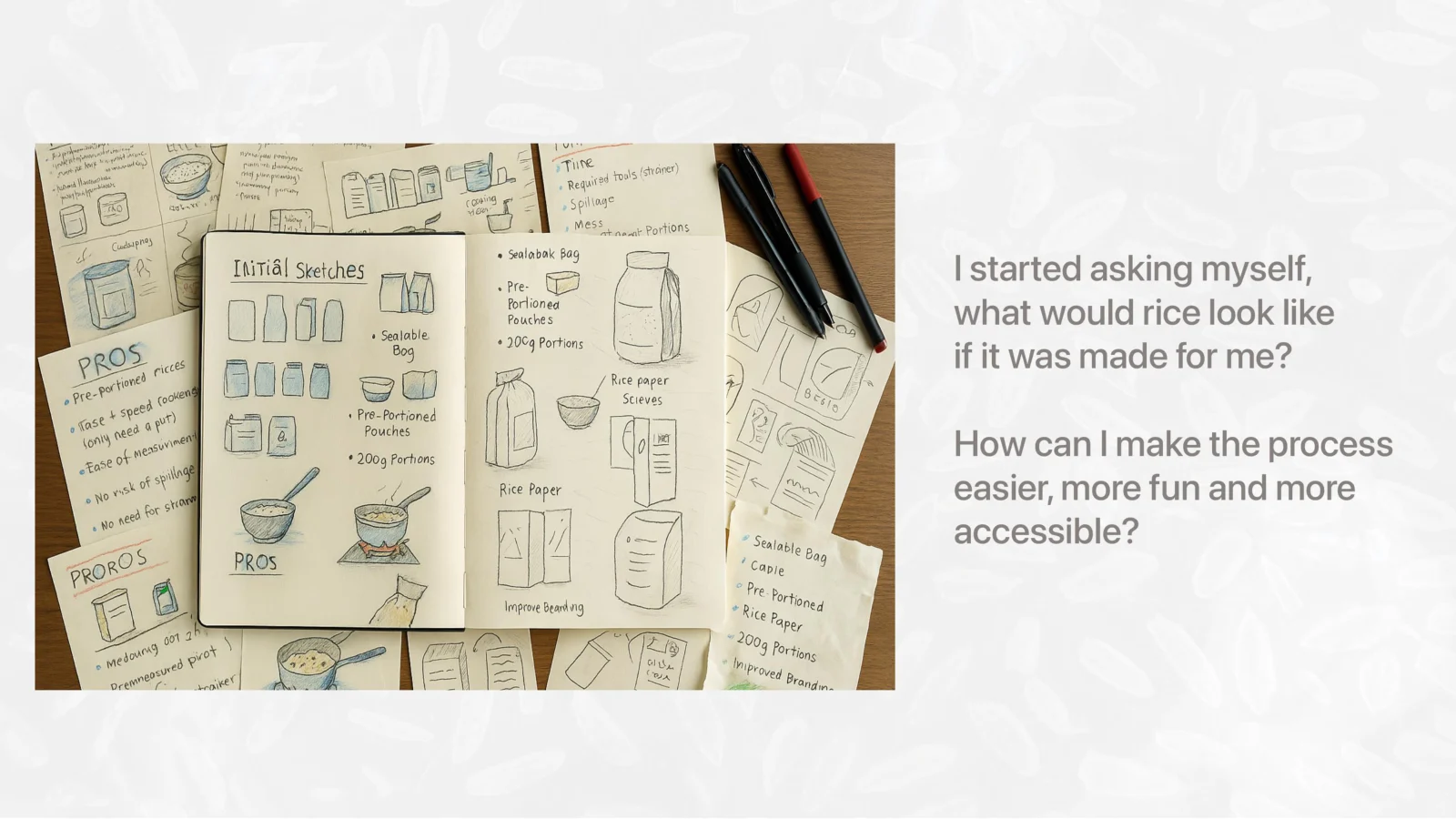
The project began in the rice aisle and continued in the kitchen. Large bags did little to help a young adult answer the small questions that make cooking feel complicated: how much rice, how much rinsing, where is the strainer?
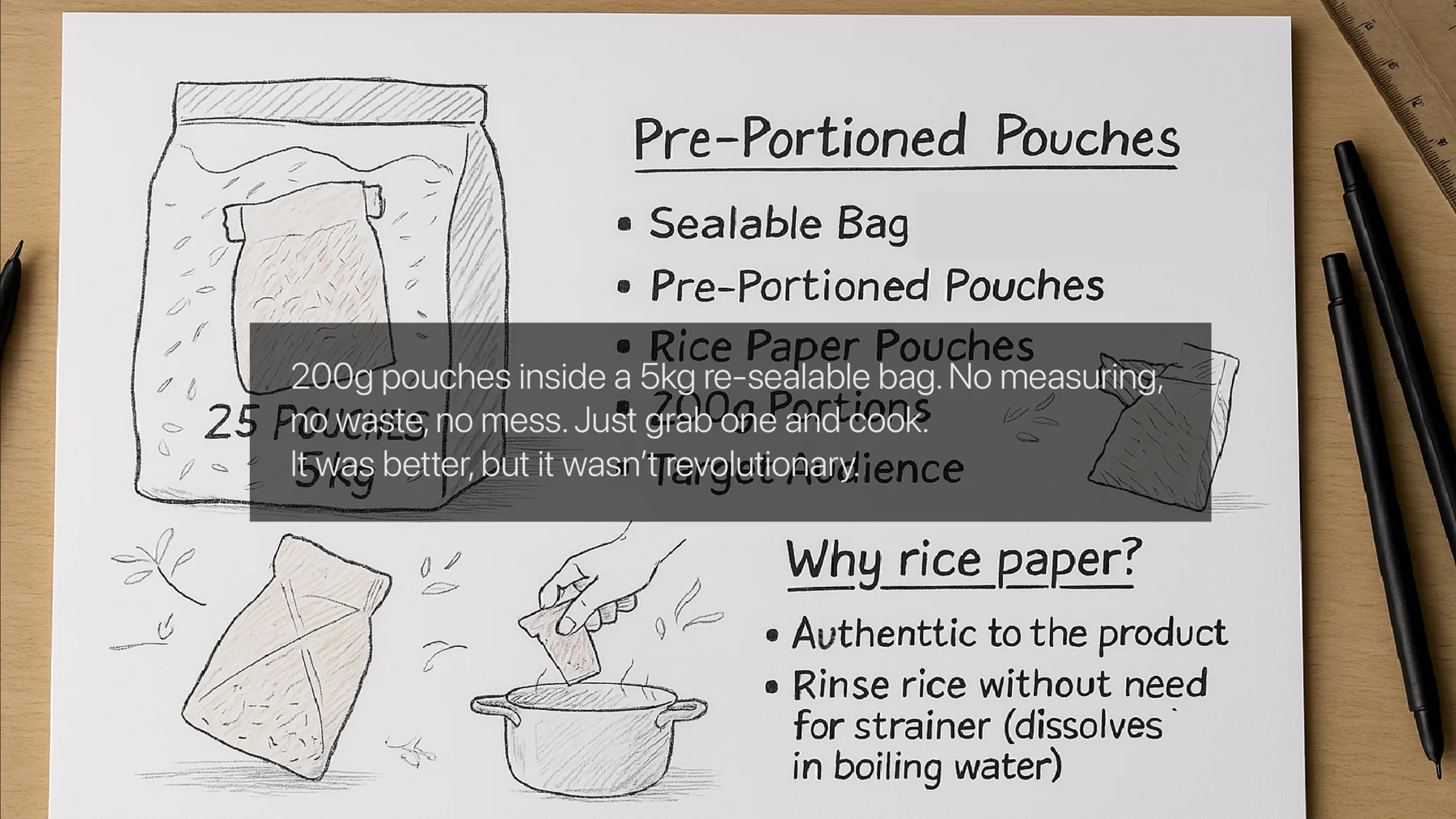
The first response was practical: 200 g rice-paper pouches inside a resealable 5 kg bag. It reduced the need to measure each portion and proposed a simpler preparation routine. But the outer bag still felt like the same familiar product. The more interesting discovery was inside it.
Rice,
rethought.
The first identity.
The direction I set aside.
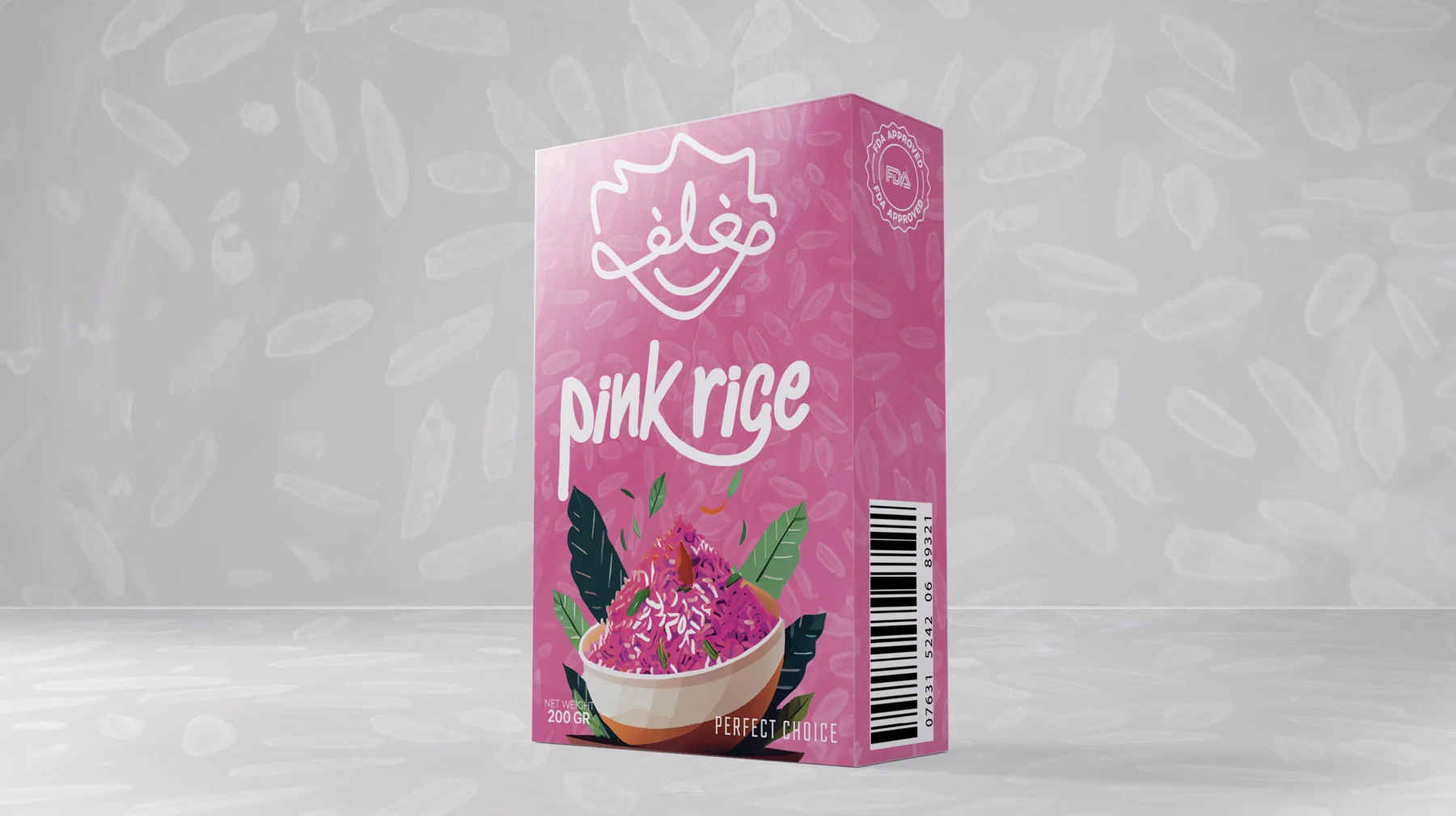
The colorful rice identity was Mghallaf’s initial direction, developed in the working files under the Hboubna / rice study. It was scrapped at the last minute, before the pivot to woven rice-paper packaging. Both stages belong to this same project.
The starting point was an existing rice pack and a familiar cooking routine. The early proposal explored measured portions, a more expressive visual identity and a brighter family of flavors. The sketches and packaging shown here preserve that initial direction.
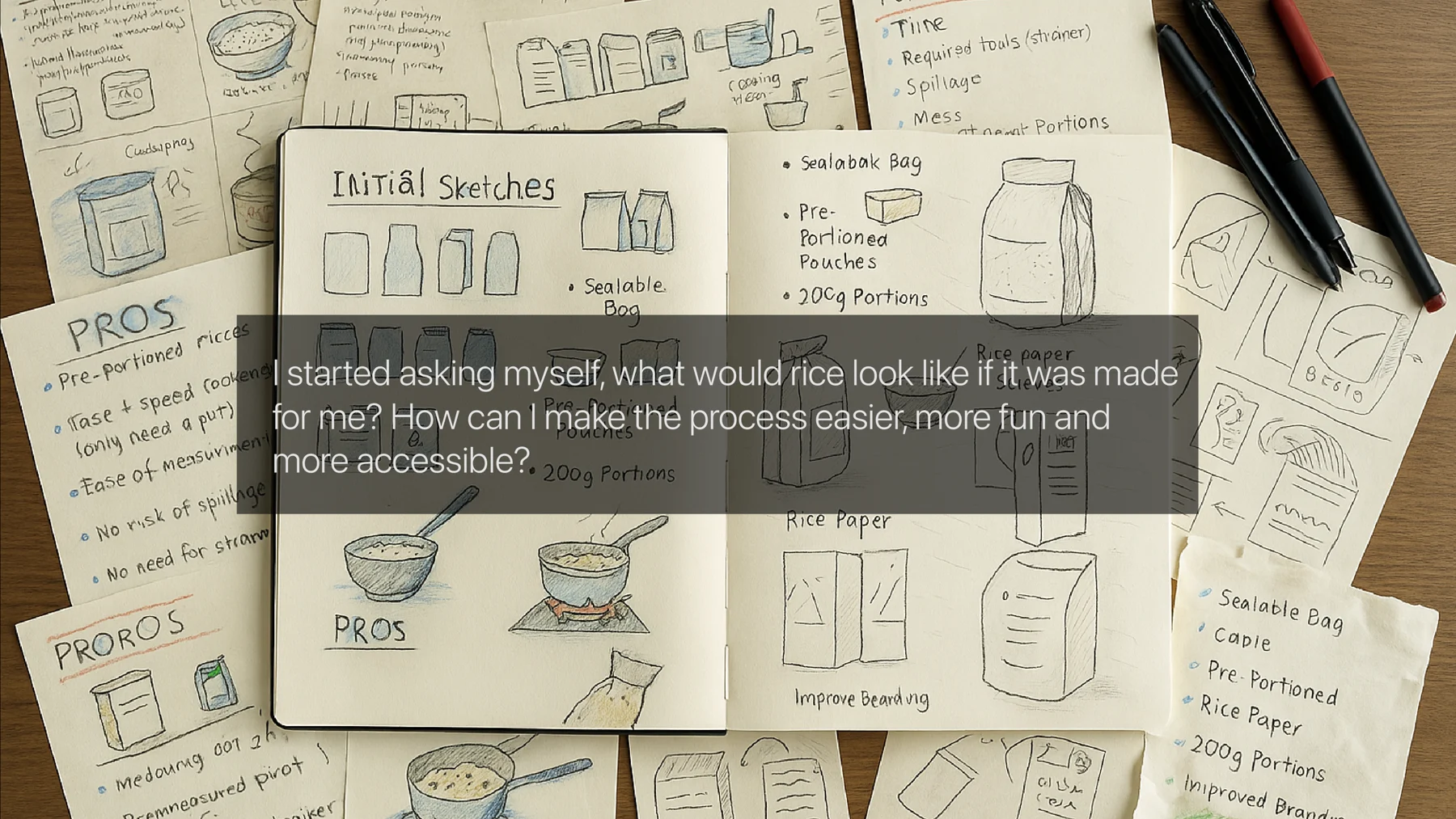
From the rice aisle
to the notebook.
The early sketches ask how rice could become easier to buy, portion and prepare. A resealable 5 kg bag containing 200 g rice-paper pouches was one proposal. This practical study ran alongside the initial identity and package graphics.
Six flavors.
Six colors.
One early identity.
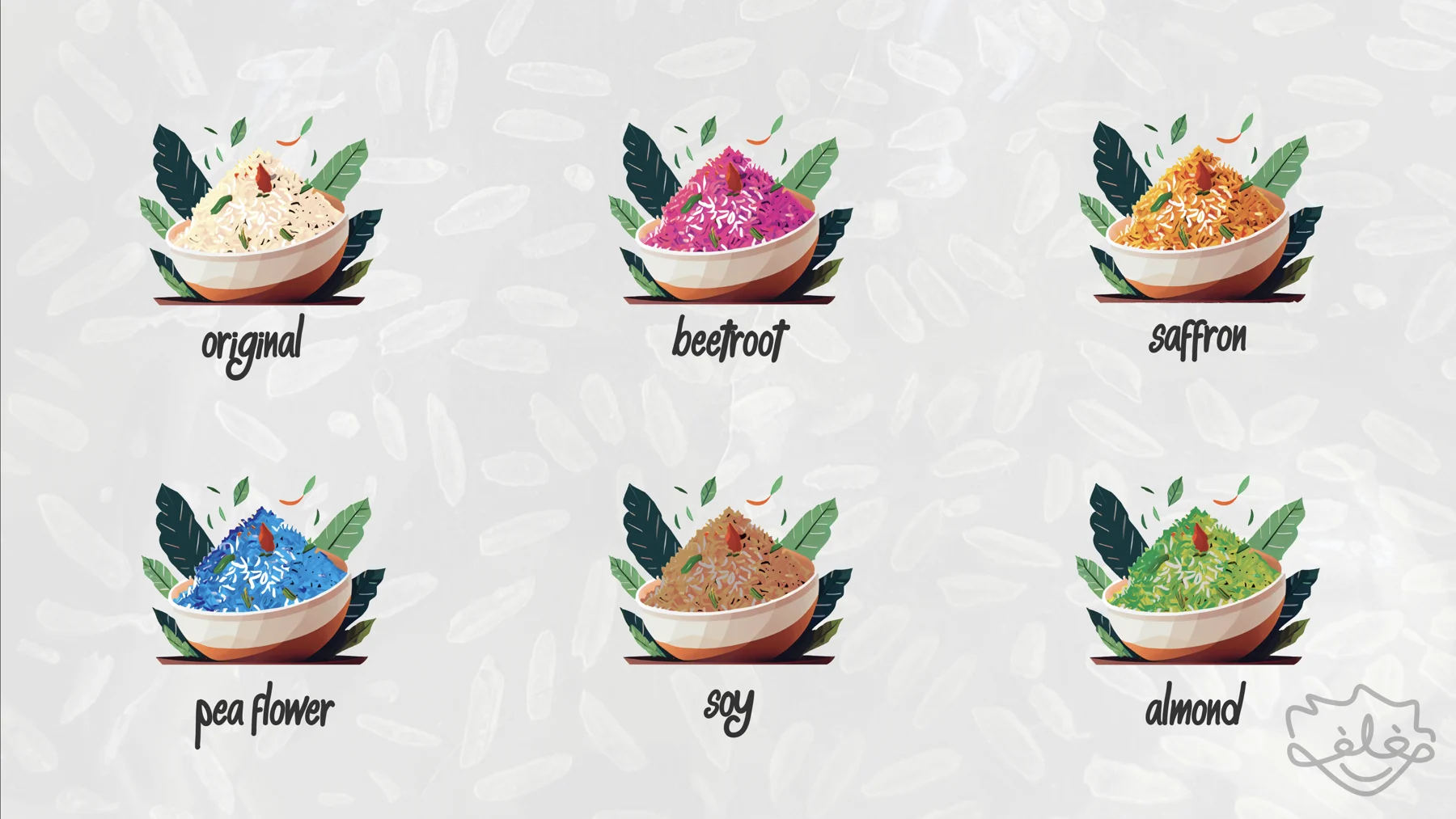
The flavor board explored original, beetroot, saffron, pea flower, soy and almond rice. Each variant had a distinct color, expressive bowl imagery and informal lettering. “Rinse. Boil. Serve.” brought the preparation sequence onto the pack.
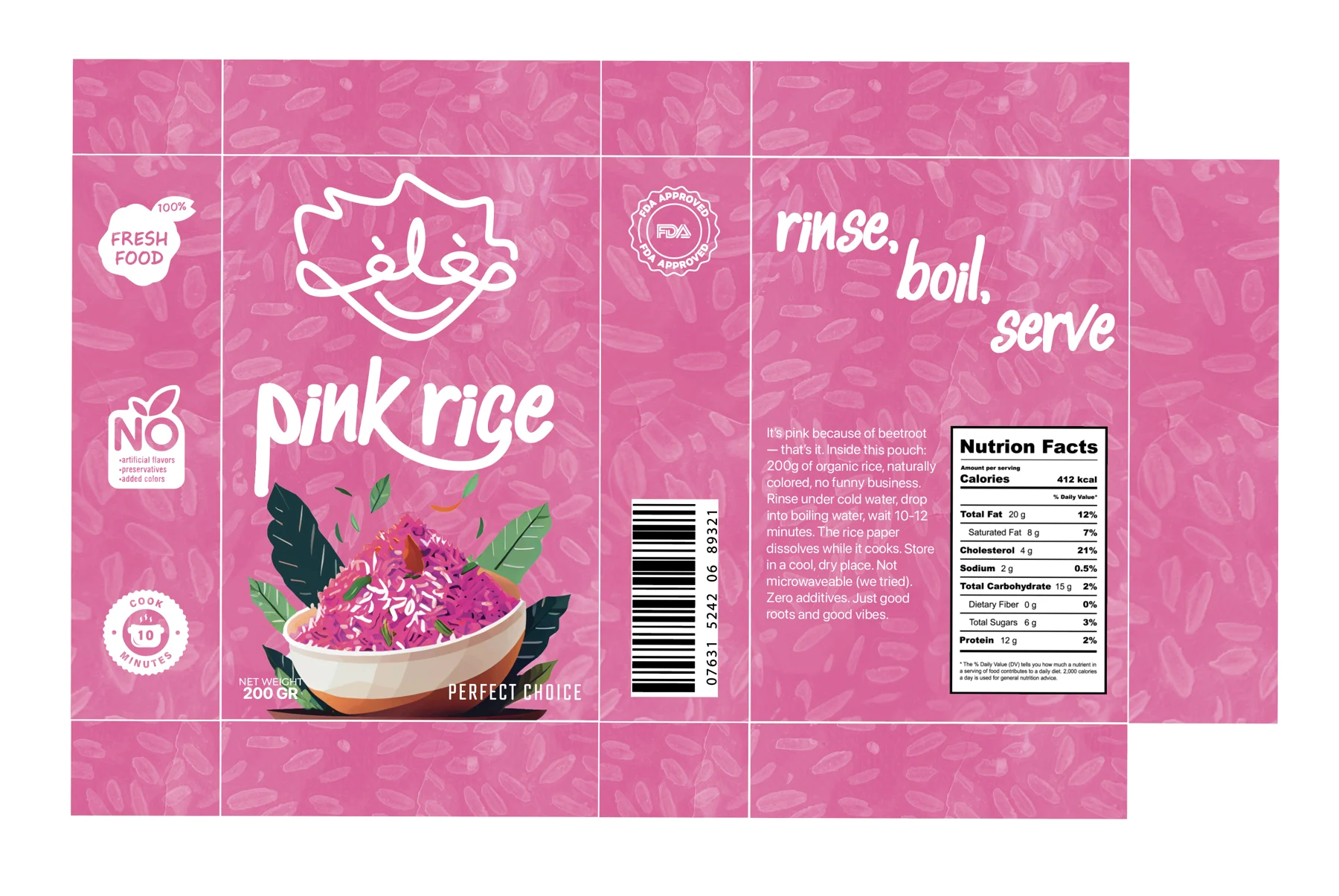
The flat artwork and three-dimensional visualization show how that family could appear on a shelf. This was a design direction, not a manufactured range. The colorful identity was set aside; the later project developed a different form, palette and mark around the material itself.
A late change
in direction.
The project continued through rice-paper experiments, weaving references and physical prototypes. The next act follows that development into the final Mghallaf package.
What if the wrapping
became the identity?
A new direction, built through the material. From here, the story follows the rice-paper pouch, the woven outer shell and the final identity.
The pouch became
the product.
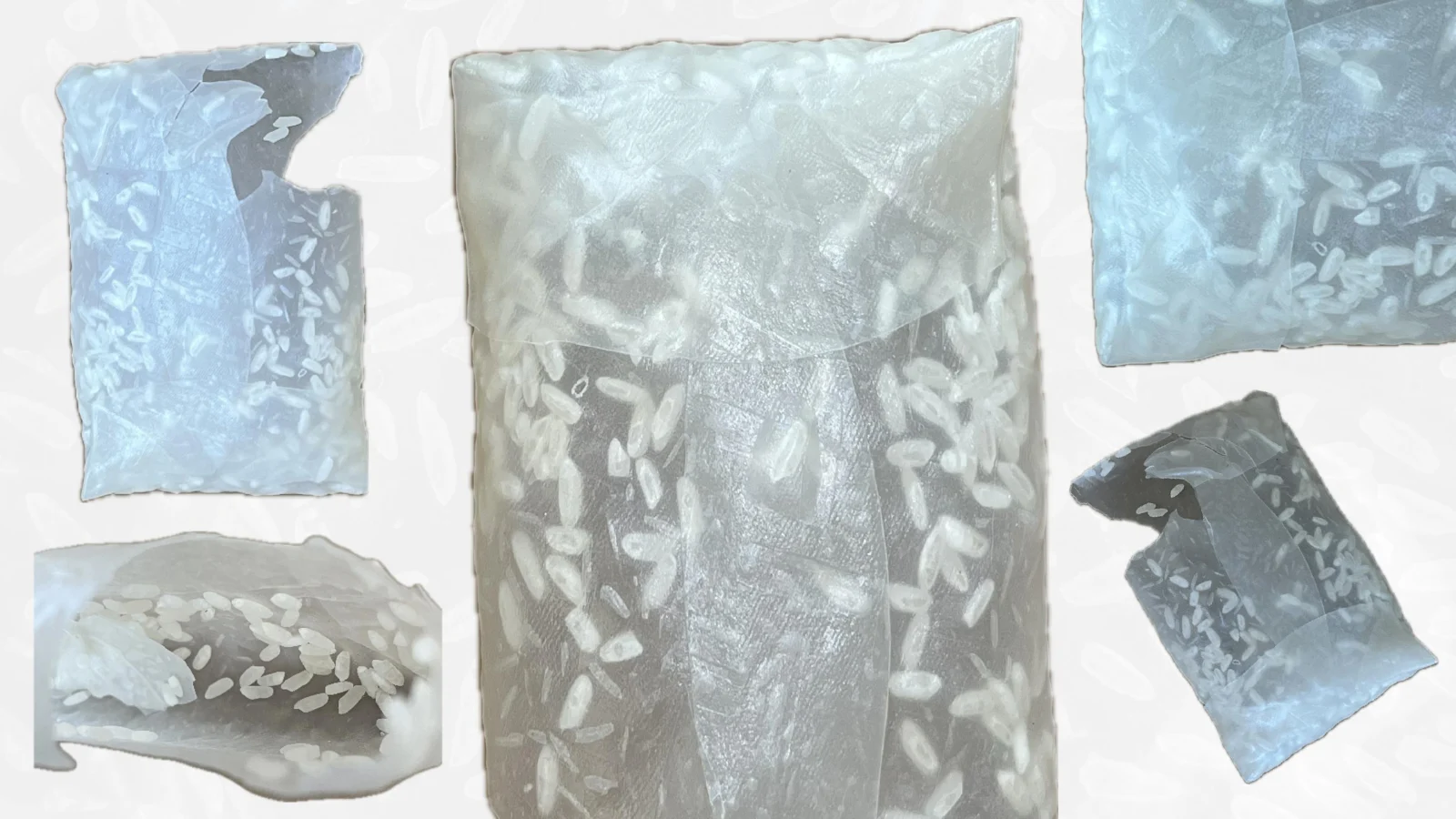
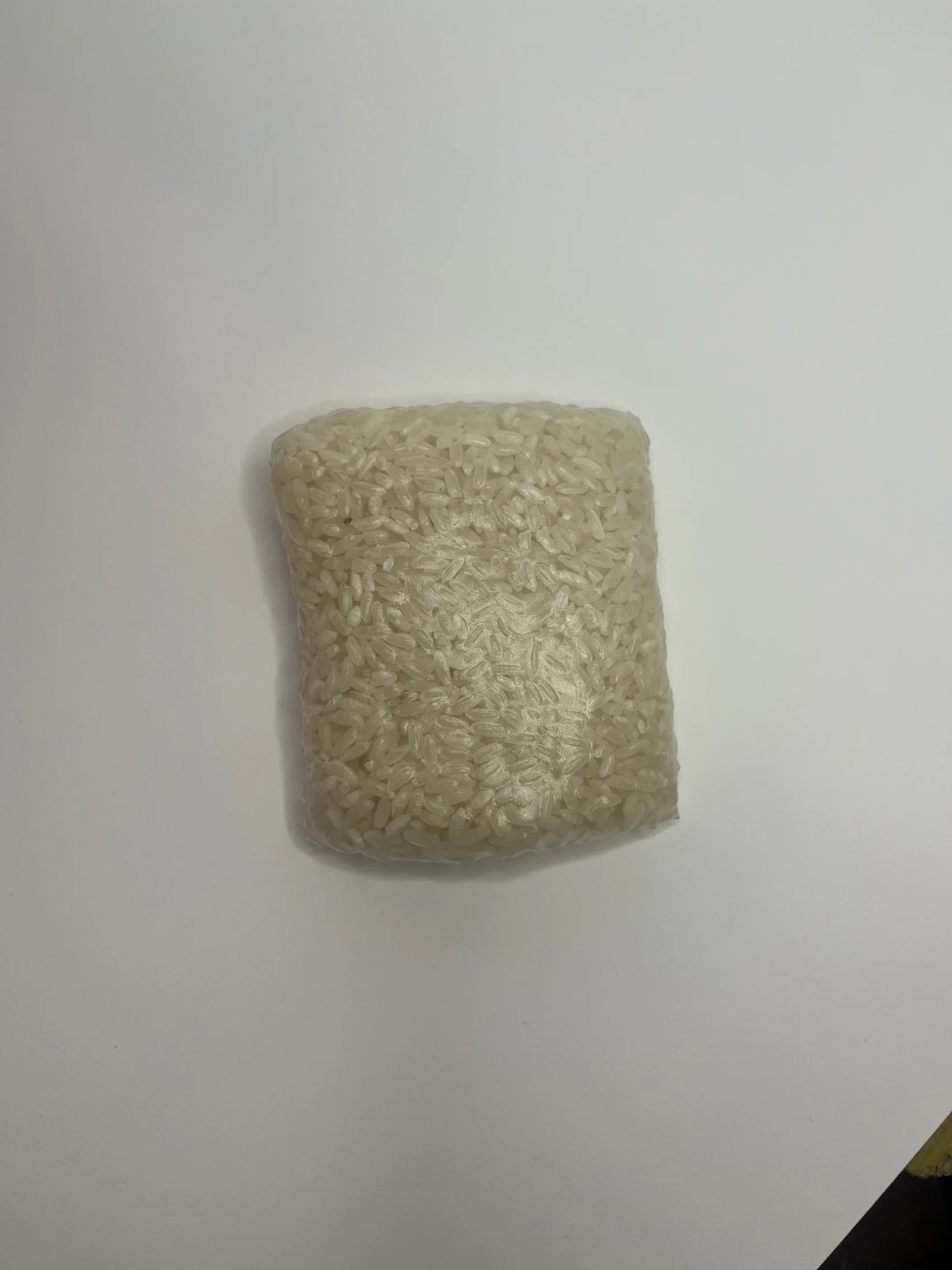
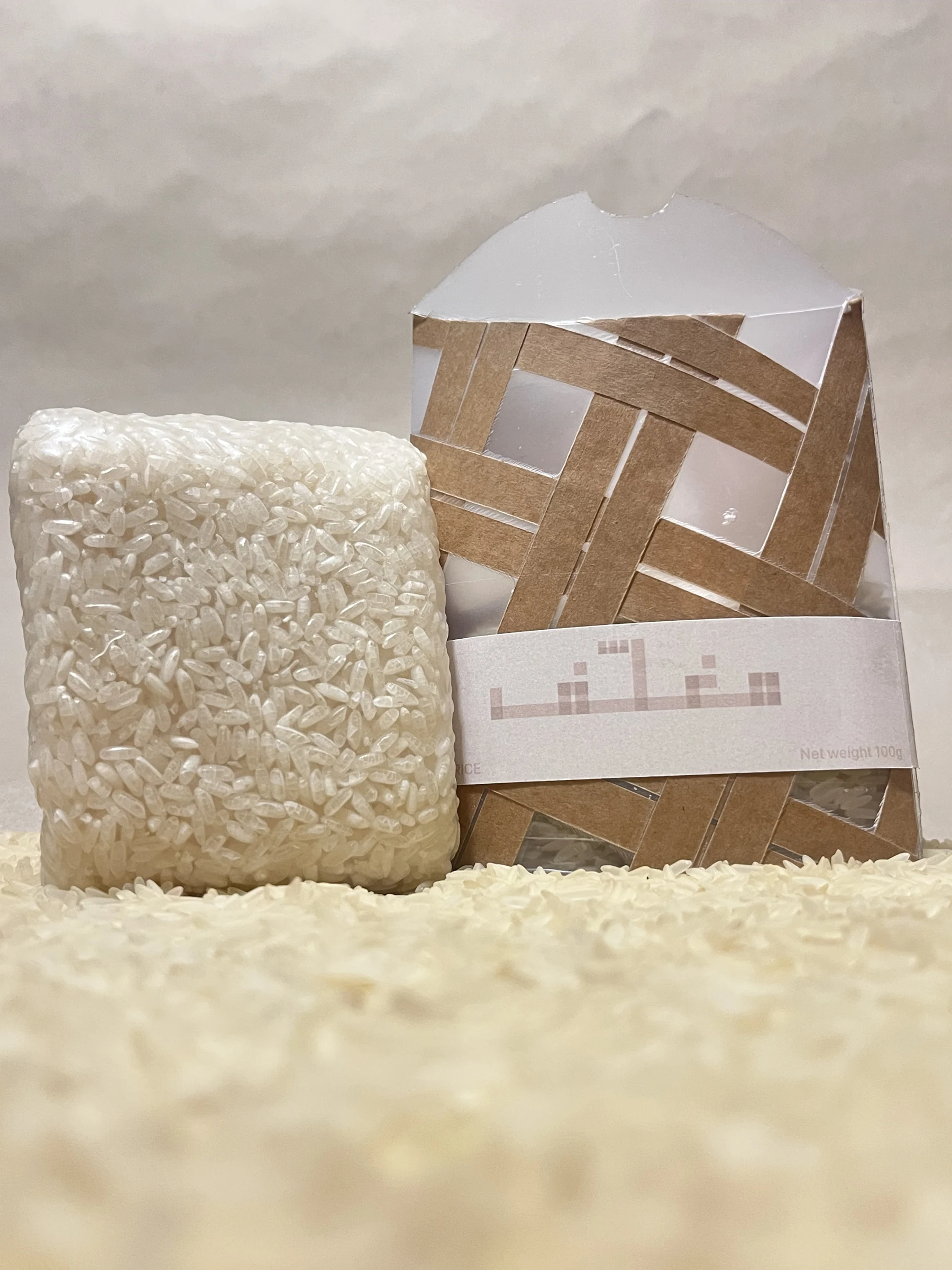
Rice paper gave the rice a visible, tactile wrapper. During the earlier studies, the thin pouches broke; the response was to look at traditional rice-rinsing baskets and their woven construction. Weaving was explored as a way to give the material more texture and structure.
The result shifted the project. Individual portions no longer felt like anonymous contents of a large bag. Each had a form worth presenting on its own. Mghallaf, meaning “wrapped,” emerged from this wrapping technique and its connection to Arabic culture. The final concept moved to a 100 g single portion.
Borrow the logic
of a basket.
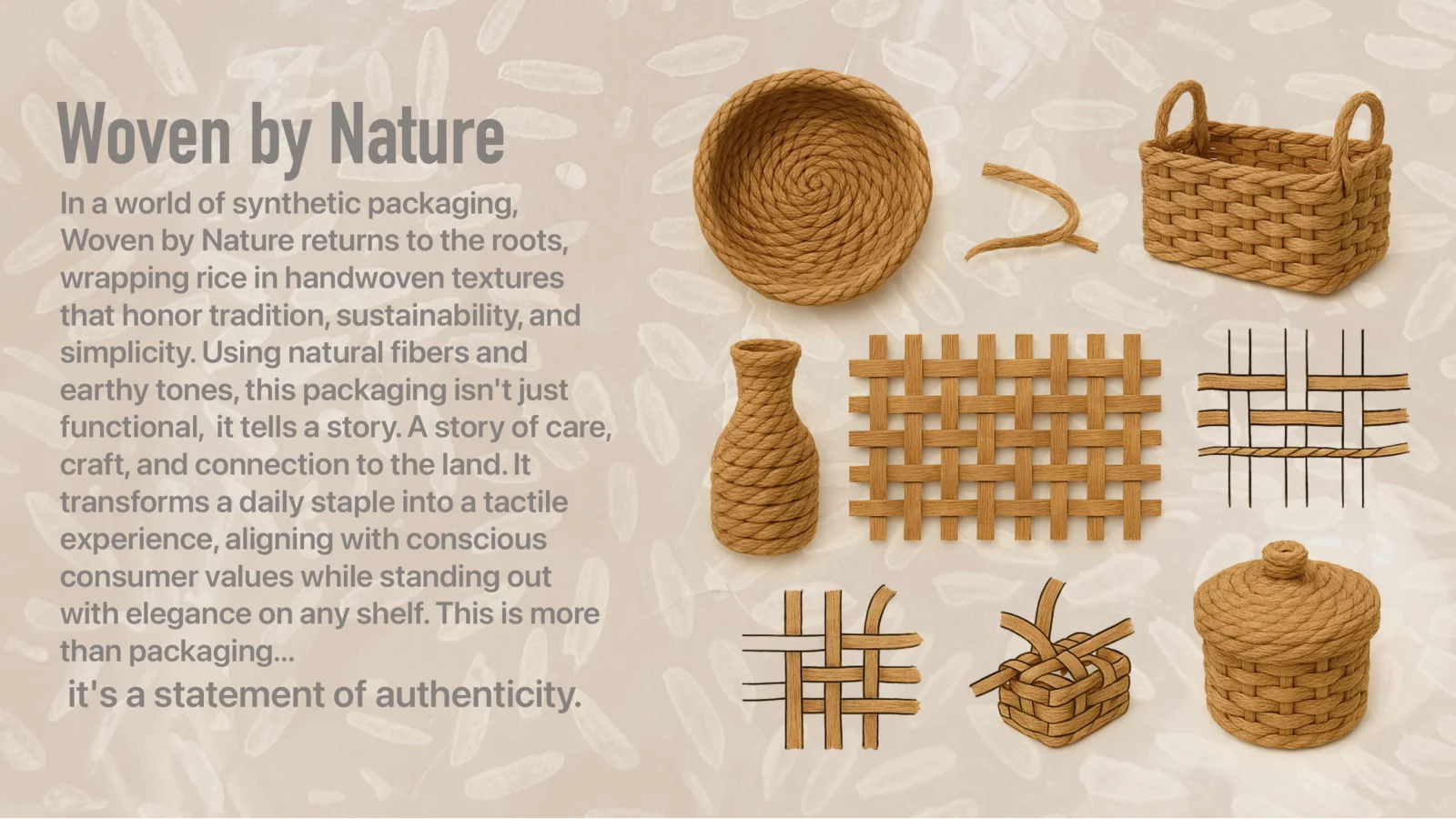
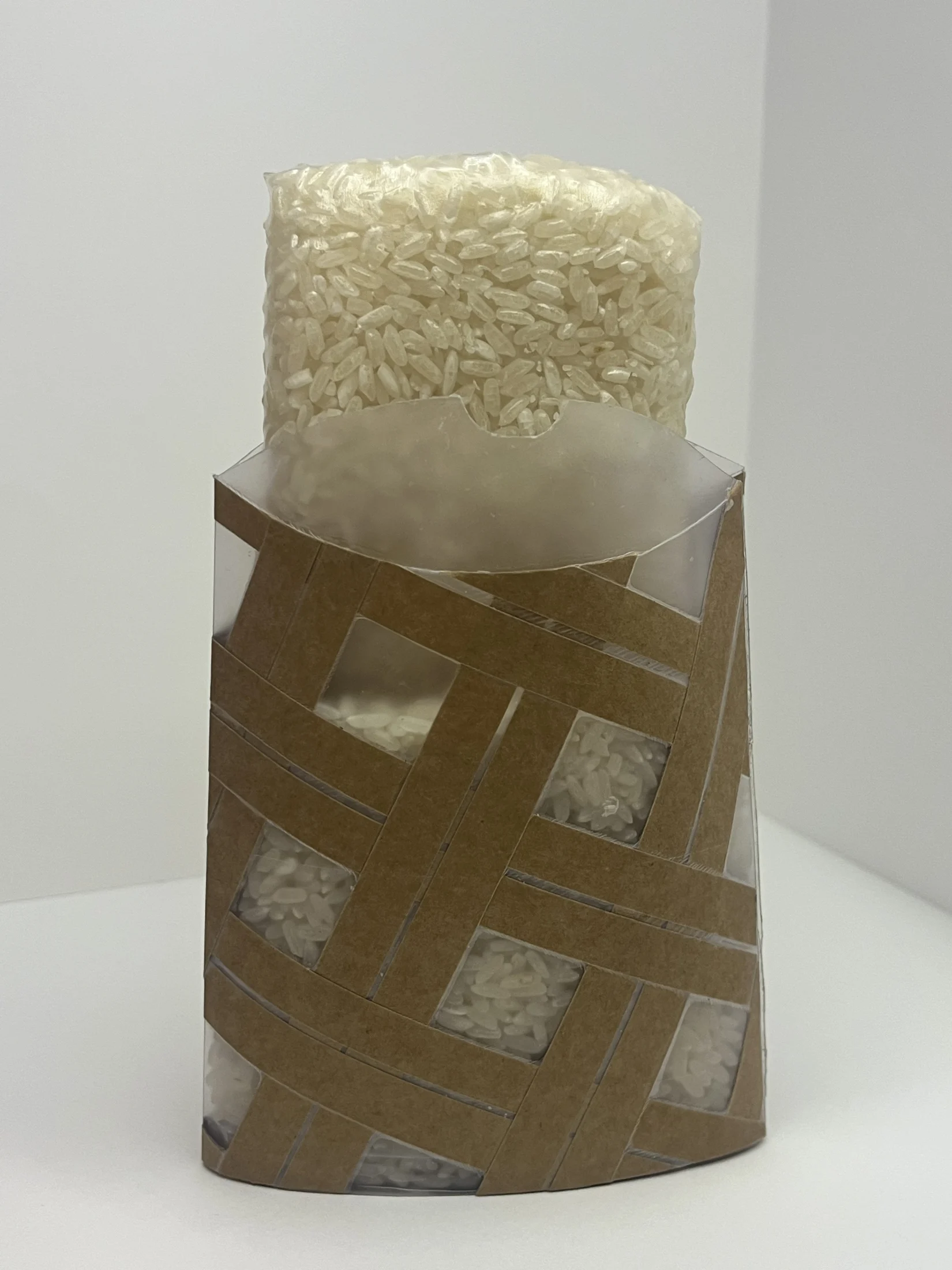
The reference was weaving: strips crossing, openings between them, and a surface built from repeated actions. The presentation’s “Woven by Nature” direction brings this language into the outer package through natural-looking fibers, earthy color and a visible handmade texture.
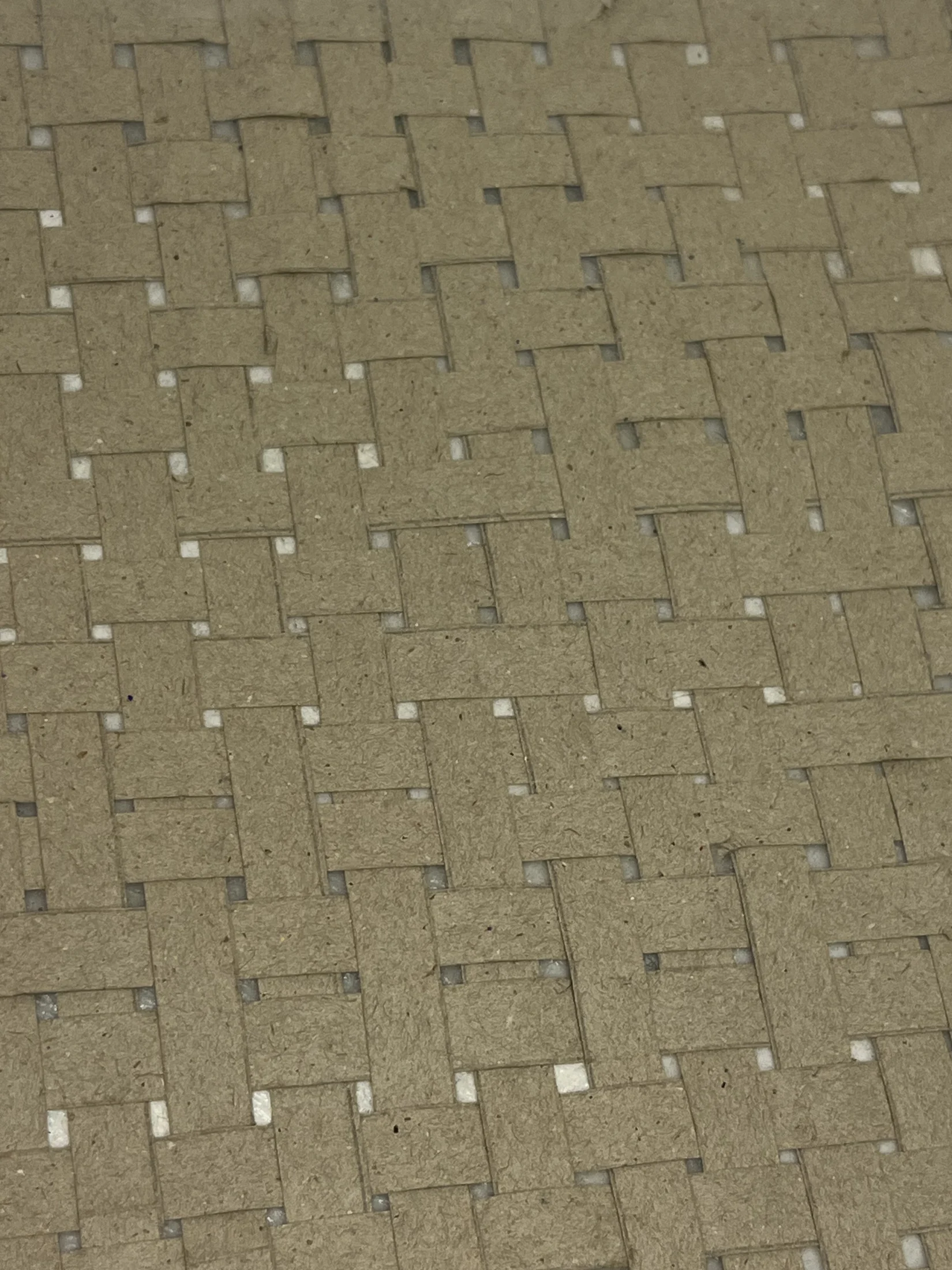
The aim was to make a daily staple feel cared for. Kraft and off-white tones let the material lead. Open squares interrupt the surface, showing glimpses of the pouch beneath. The original research boards below are references that informed the work; the photographed paper and kraft trials are the project’s own material development.
The material
makes the mark.
Explore the actual material studies and the final physical prototype.
Cut. Fold.
Weave. Try again.
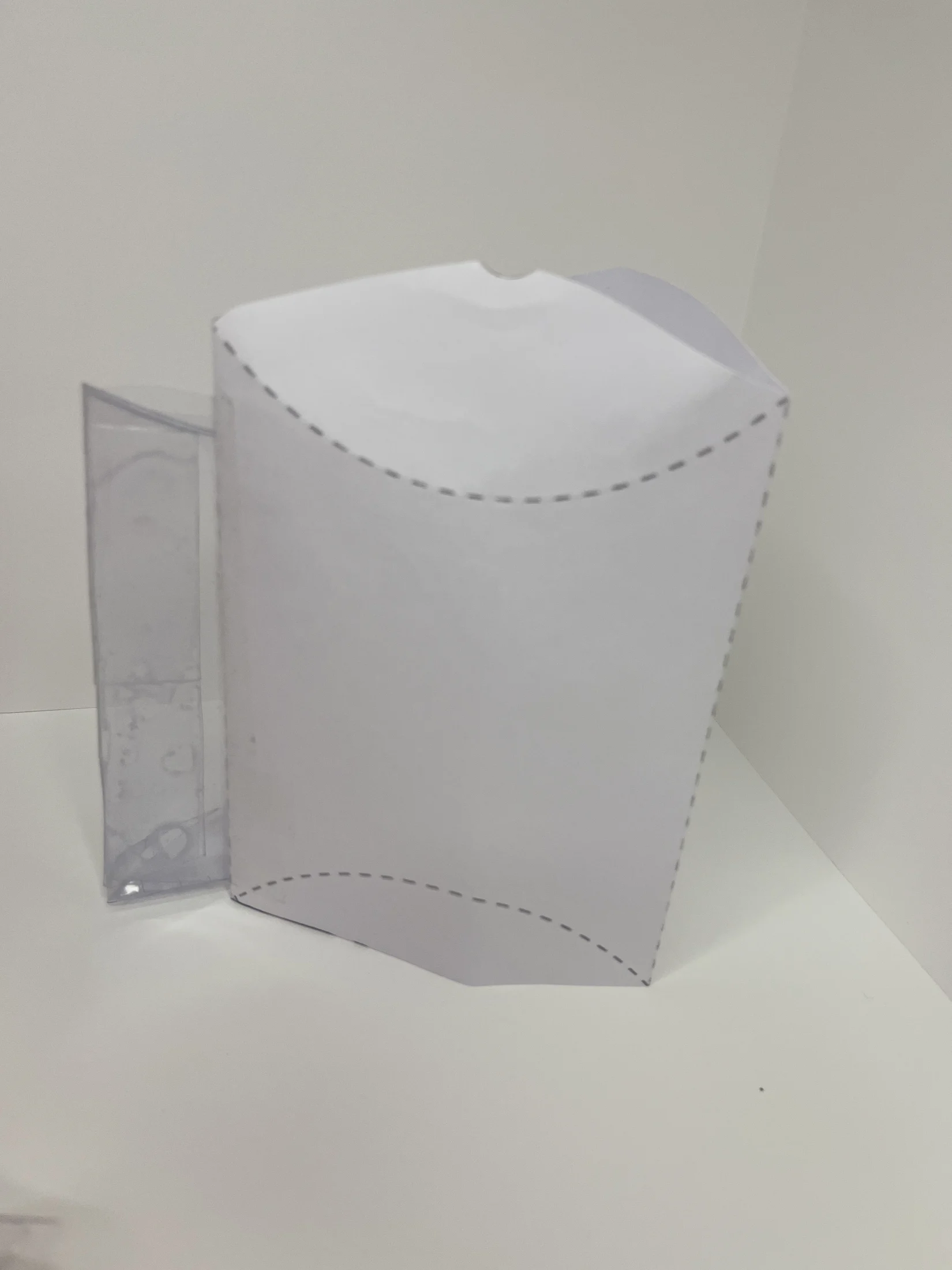
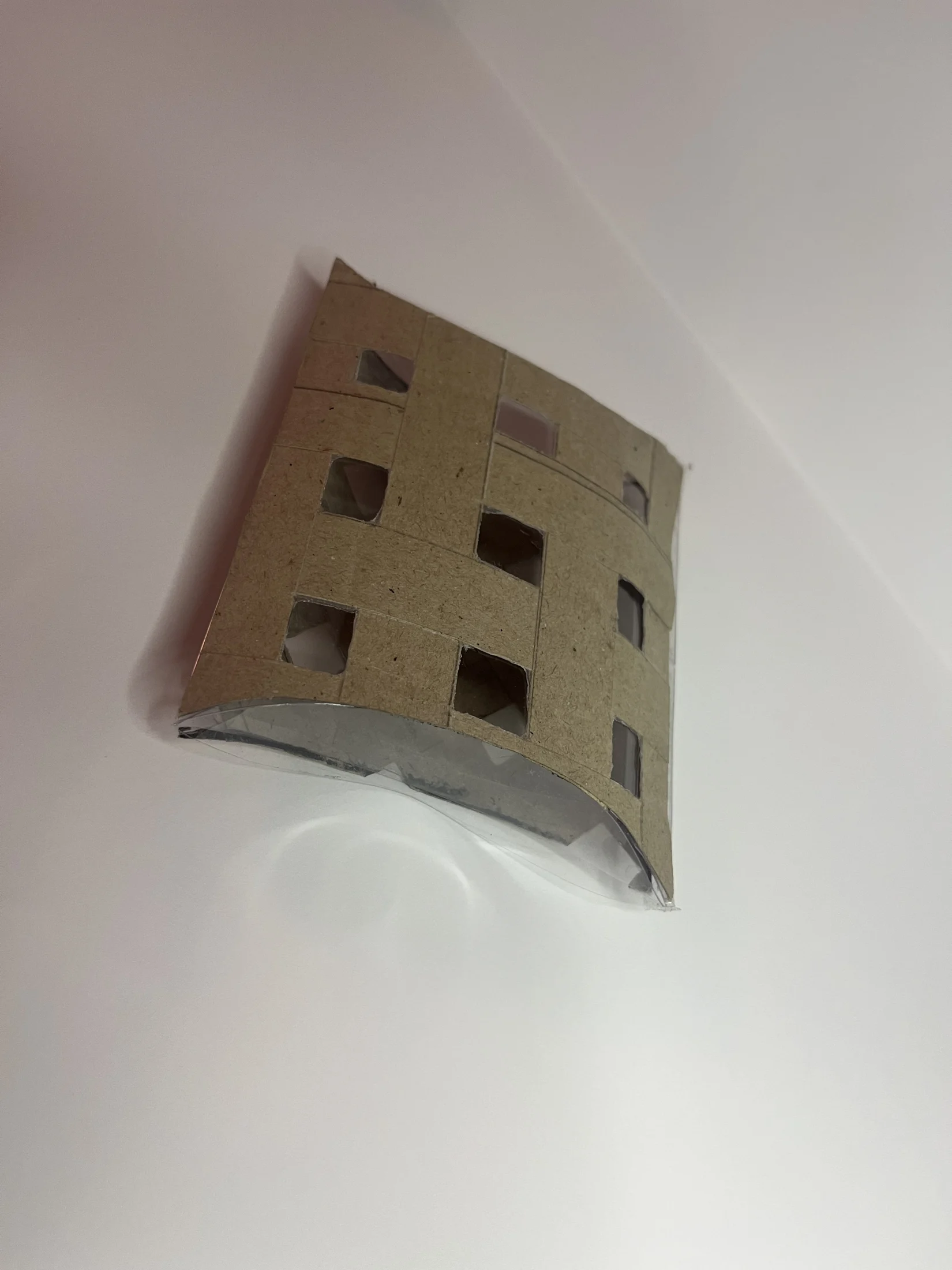
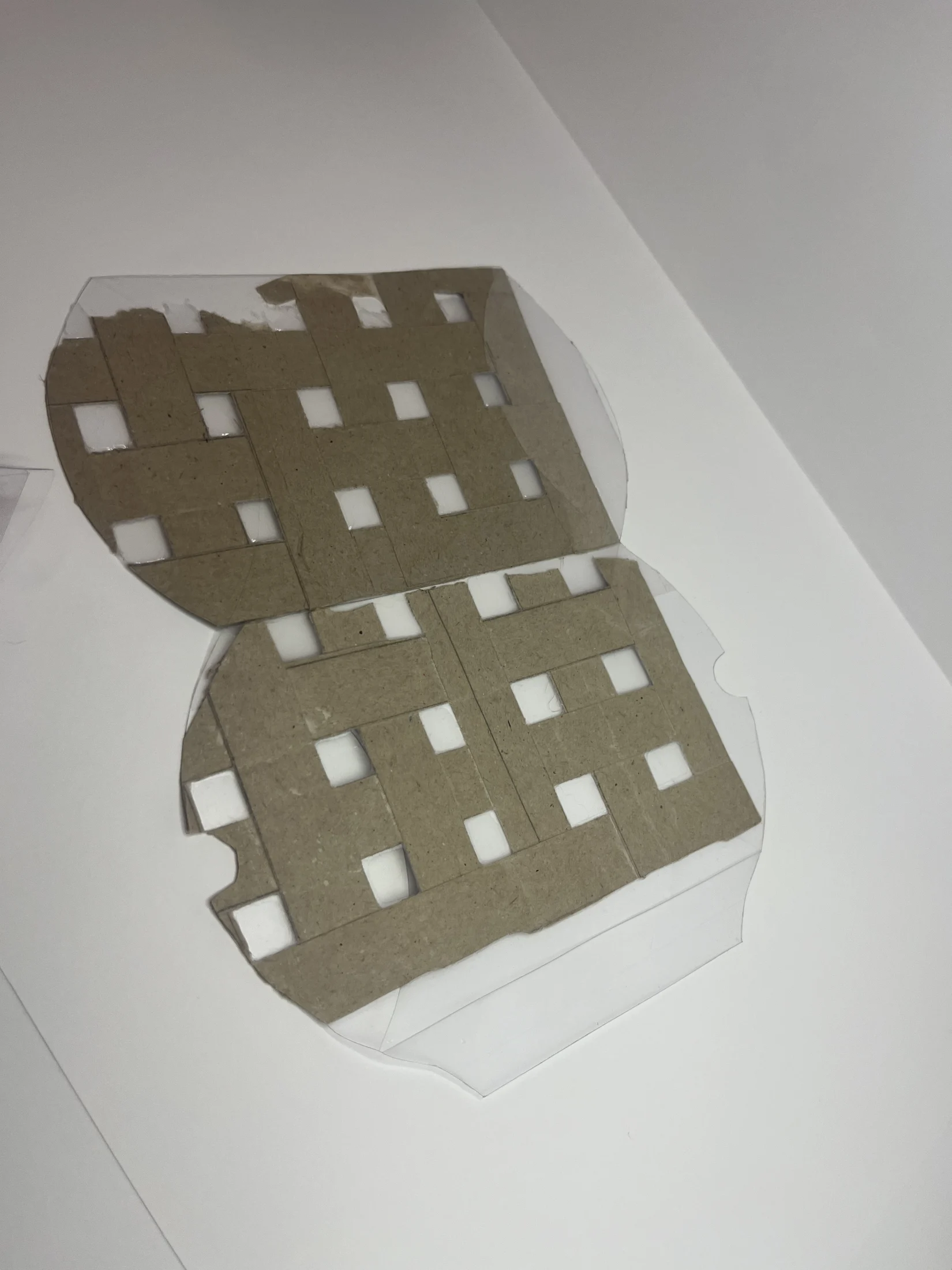
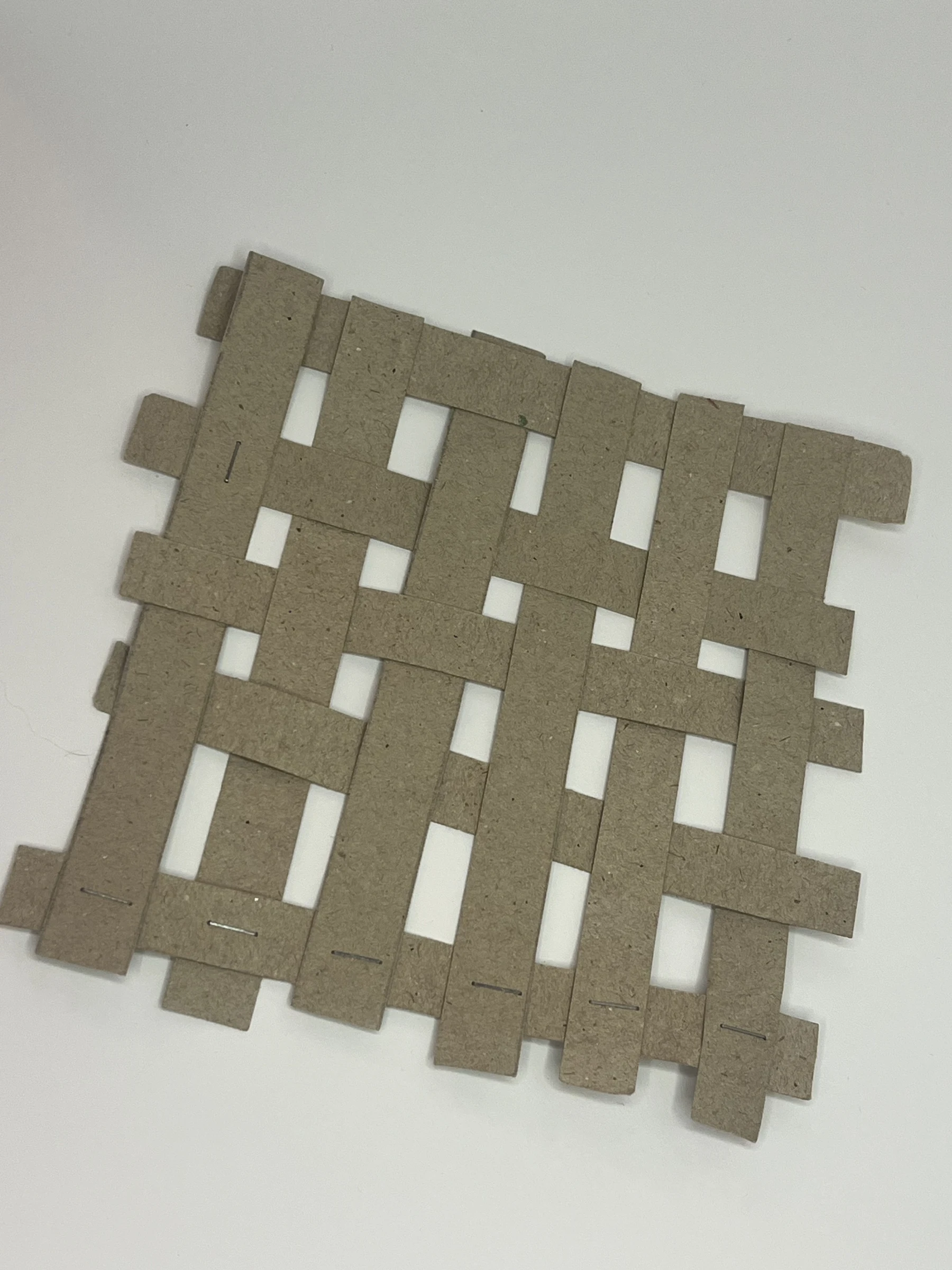
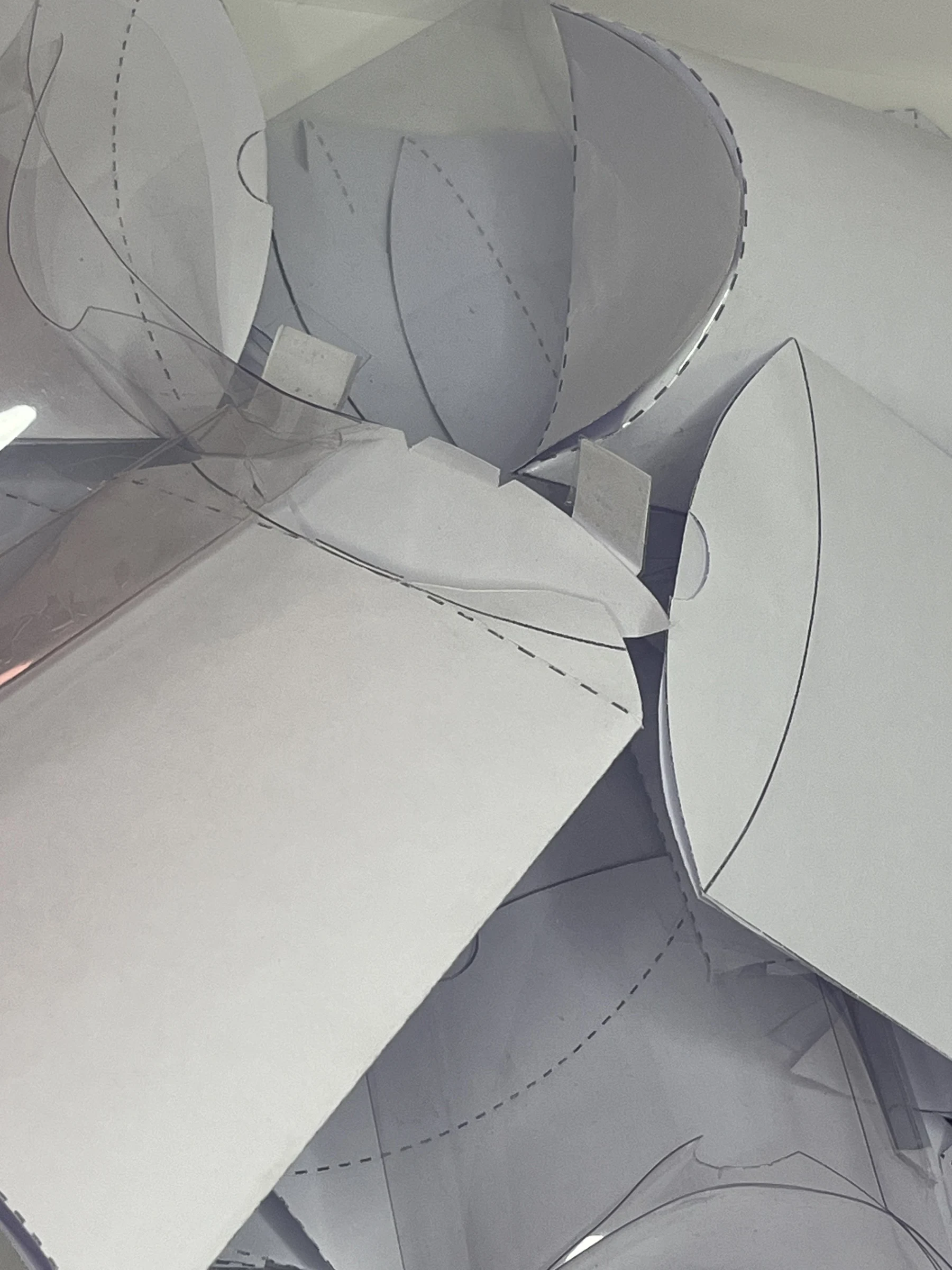
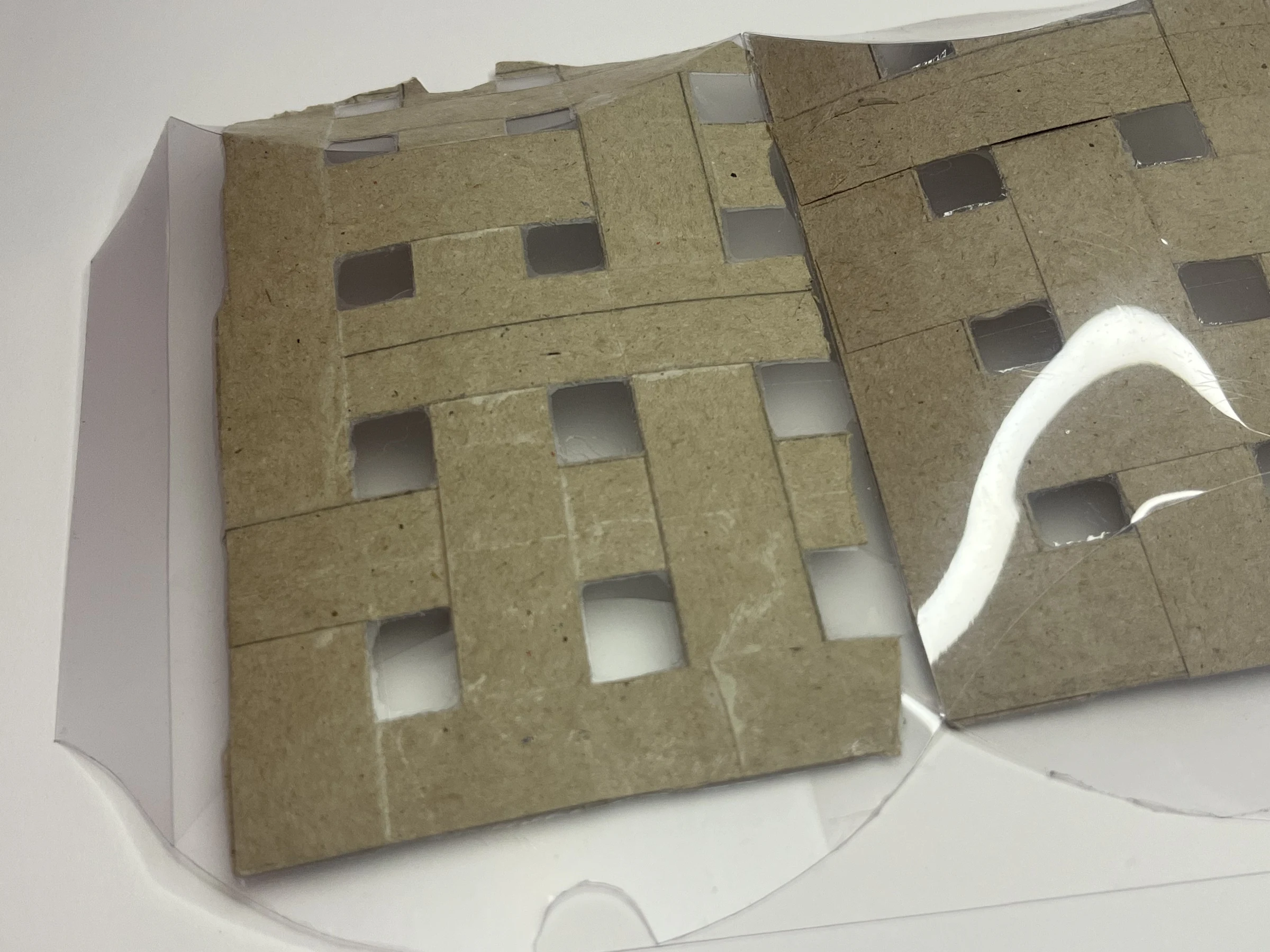
The form was worked through by hand. The archive includes plain paper volumes, clear sheet experiments, dense woven surfaces and versions with larger square openings. These trials show the relationship between a flat pattern, a curved wall and the way the top and bottom close.
The outer package became a standing, curved shell. Its crossed bands echo basket weaving, while the open spaces keep the rice visible. The sequence matters: the graphic identity followed the physical construction, rather than being applied to a box chosen at the beginning.
Not just a
finished object.
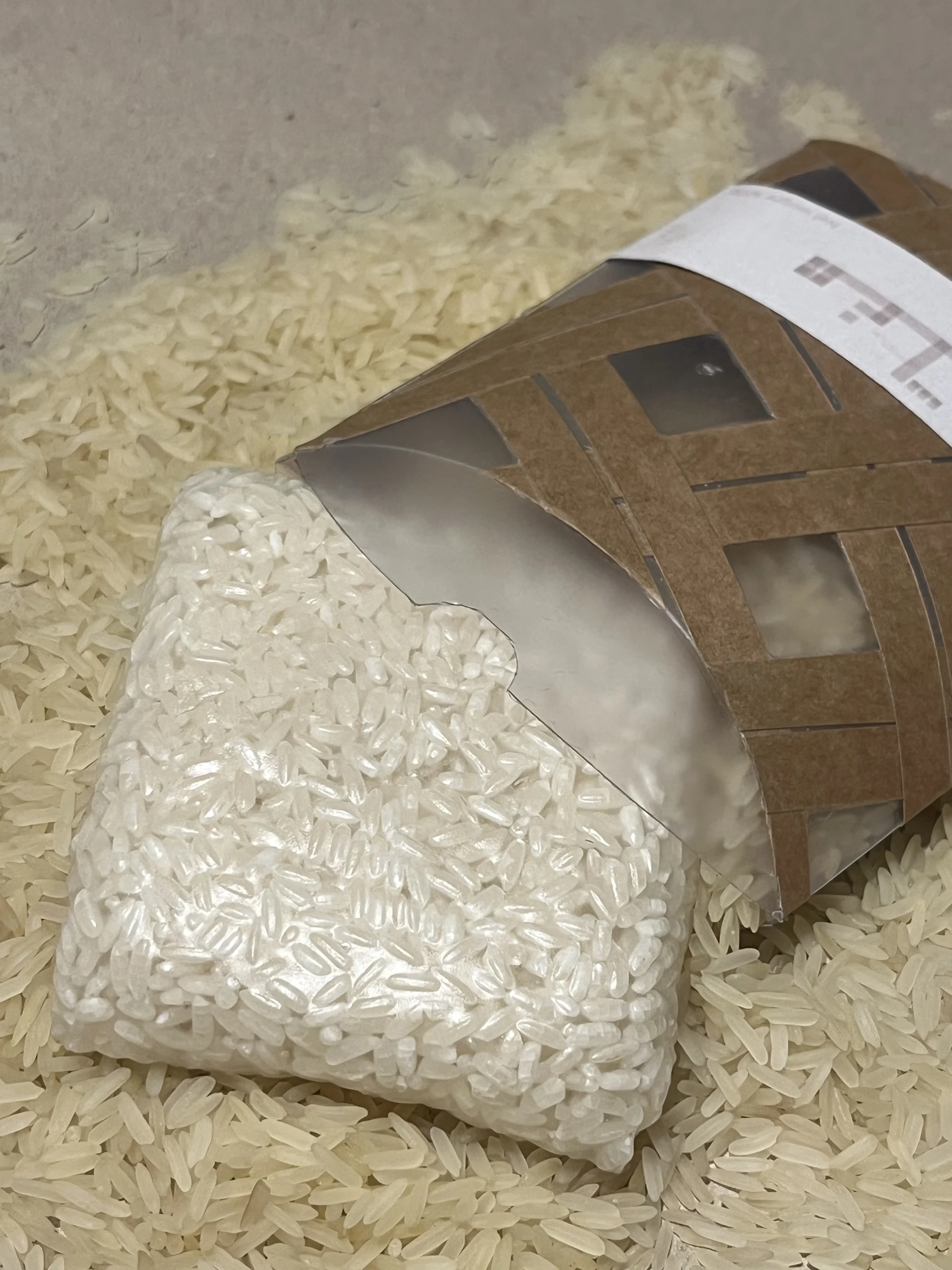
Loose strips, paper trials and an opened wrap. The construction becomes clearer when the package is laid flat.
A logo built from
the same gesture.
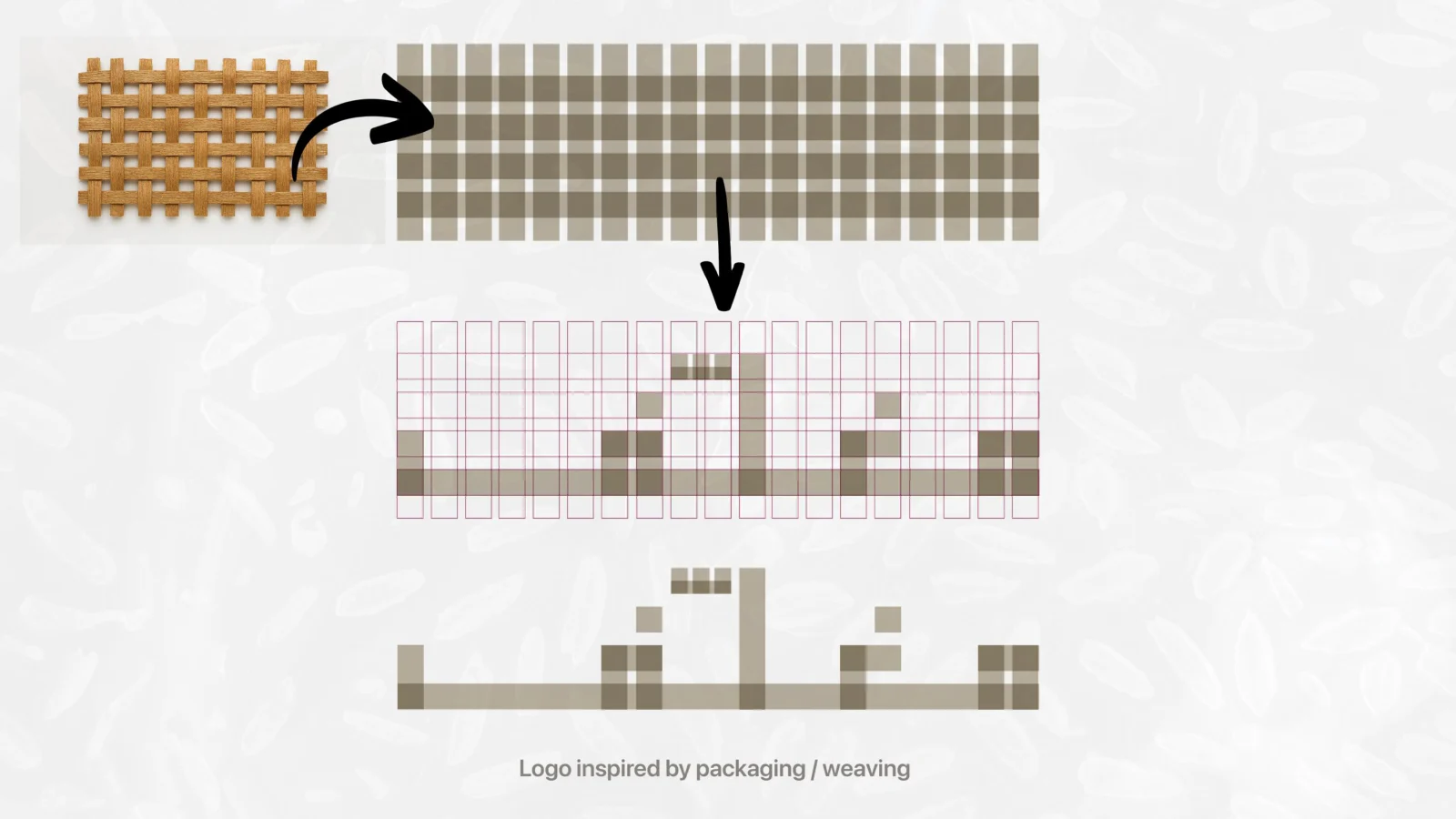
The logo study translates the crossing strips into a modular grid. The Arabic lettering takes its rhythm from the packaging: repeated units, horizontal bands and stepped edges. It is a direct visual connection between the name, the woven surface and the act of wrapping.
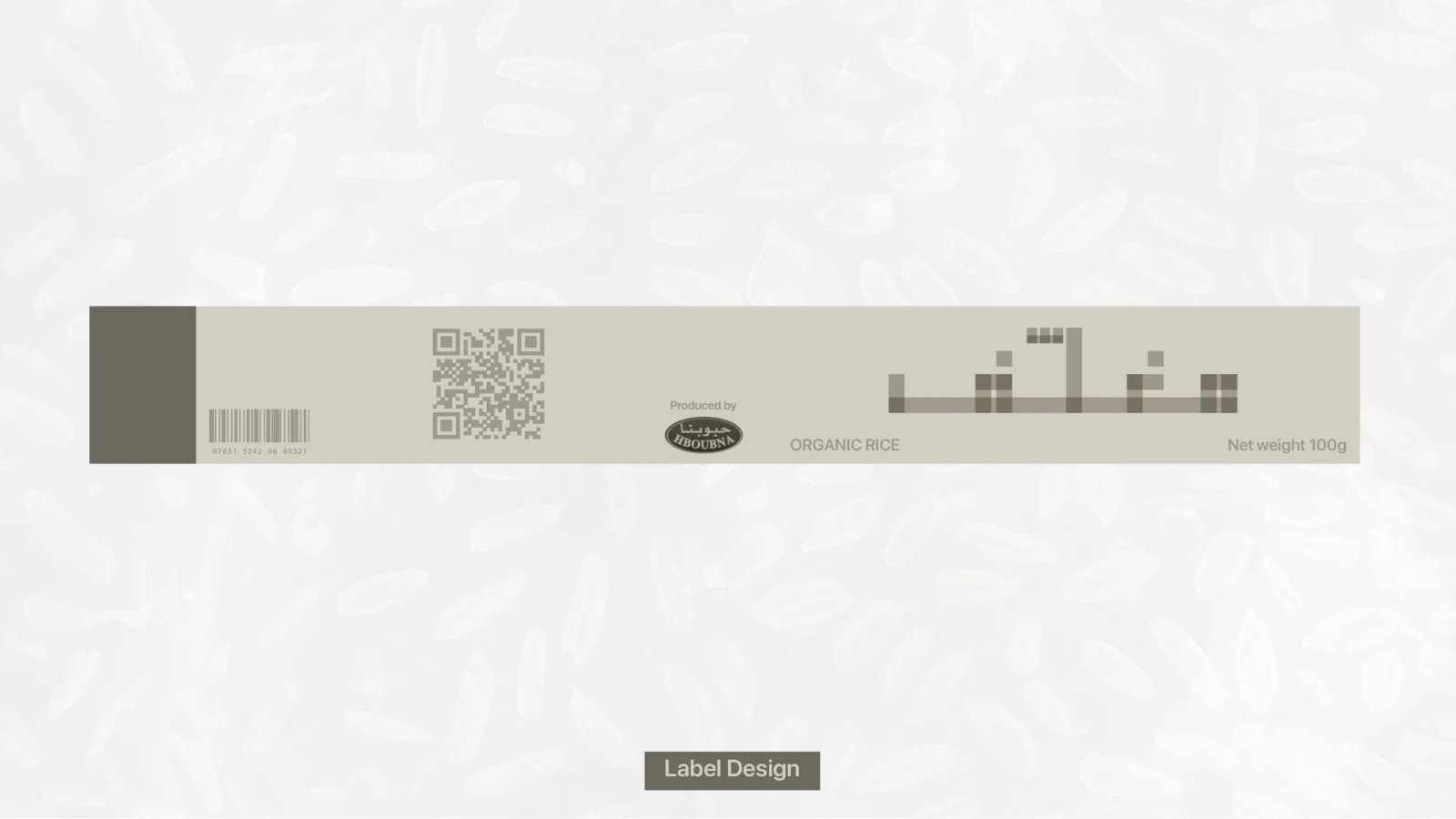
The label keeps that connection quiet. A narrow strip carries the mark, “Organic Rice,” the 100 g weight and a QR code. In the presentation, the code leads to product information displayed on a phone, leaving the physical package with a smaller amount of printed information.
Every
crossing
counts.
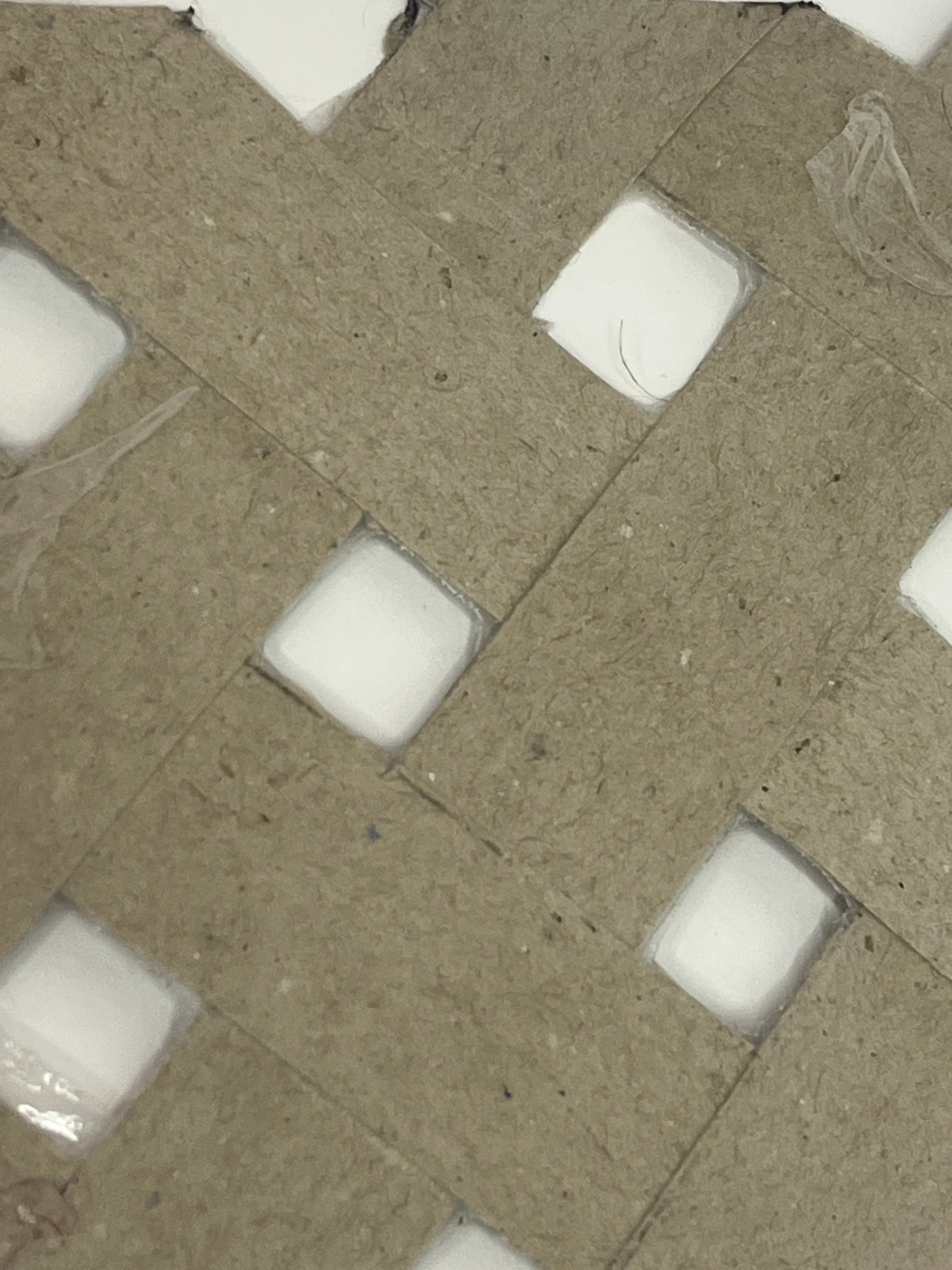
The edges, fibers and overlaps remain visible. A close view of the actual handwoven study.
Simplicity,
one portion
at a time.
The intended sequence is open, boil and enjoy: take the portion from the outer shell and place the rice-paper pouch into boiling water. This is the product proposition demonstrated in the design presentation. The work shown here documents a packaging concept and physical prototypes, rather than a tested commercial food product.
Mghallaf’s final contribution is the coherence between those layers: rice wrapped in a rice-based material, an outer package informed by weaving, and lettering derived from its construction.
Two directions, one project. Return to the initial direction.