SALT & PEPPER
A pair of everyday objects carrying a memory of Lebanese history.
From figurine to table object ↓AN EVERYDAY RITUALA study in
two silhouettes.
From figure
to function.
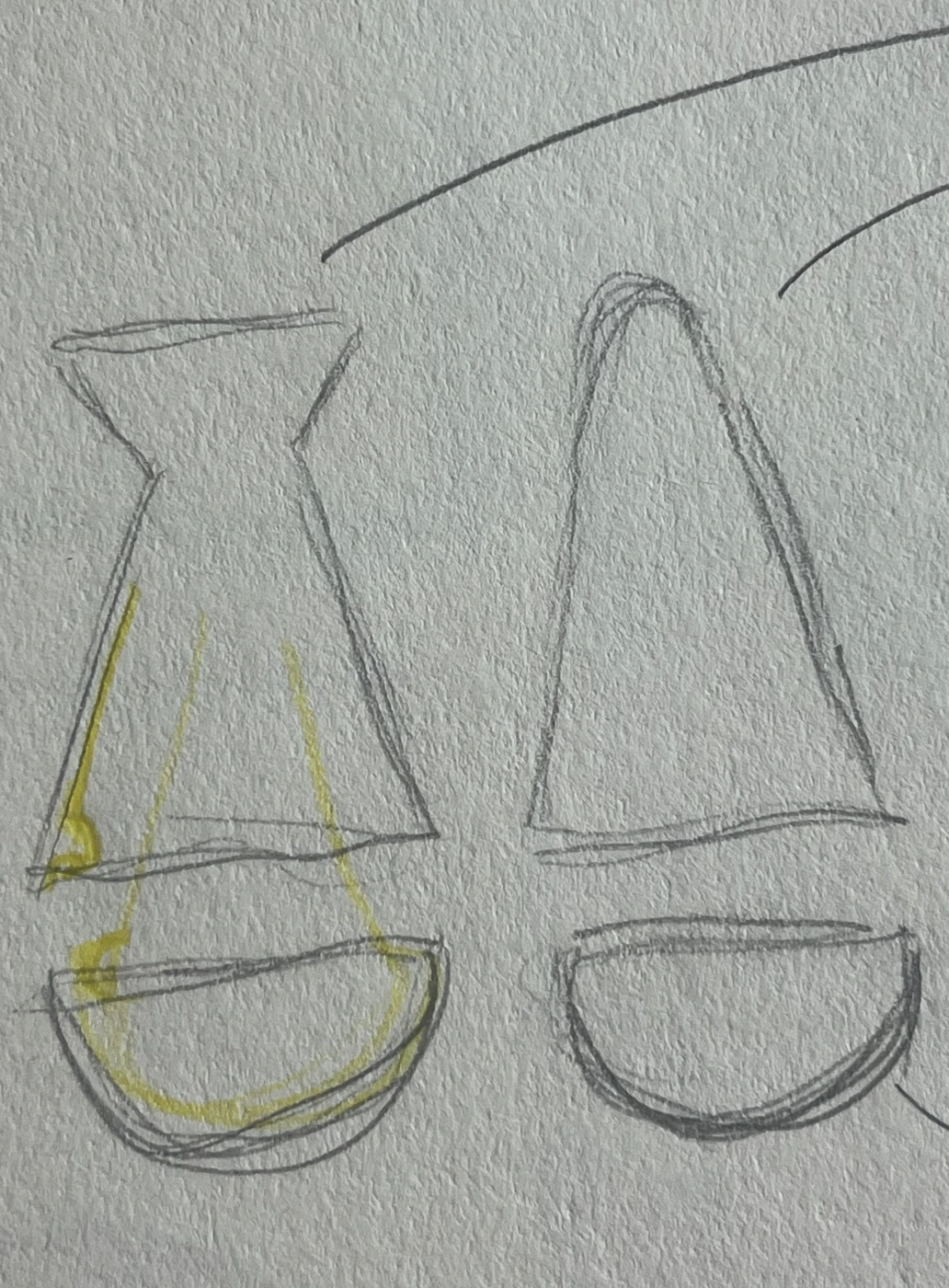
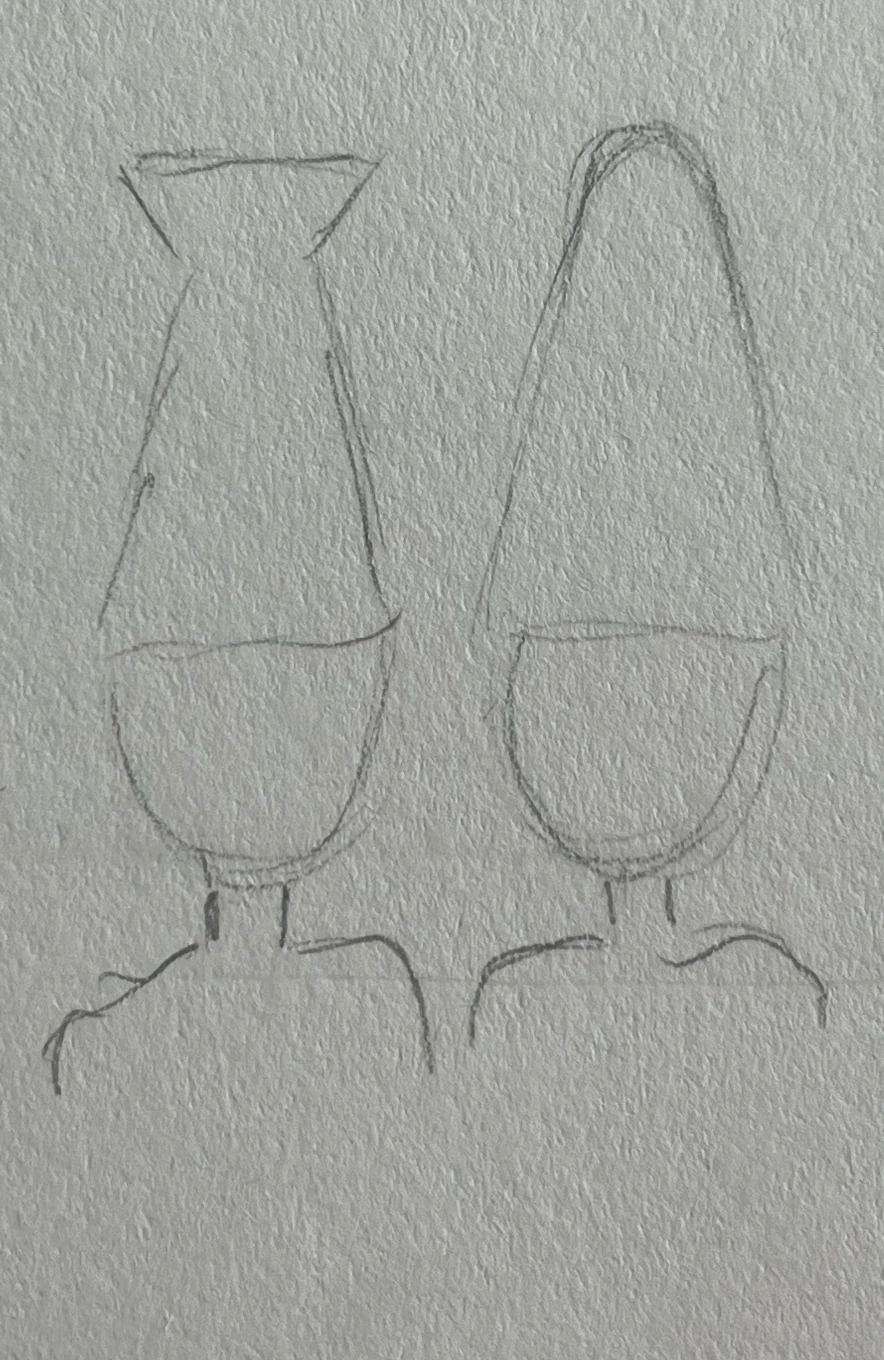
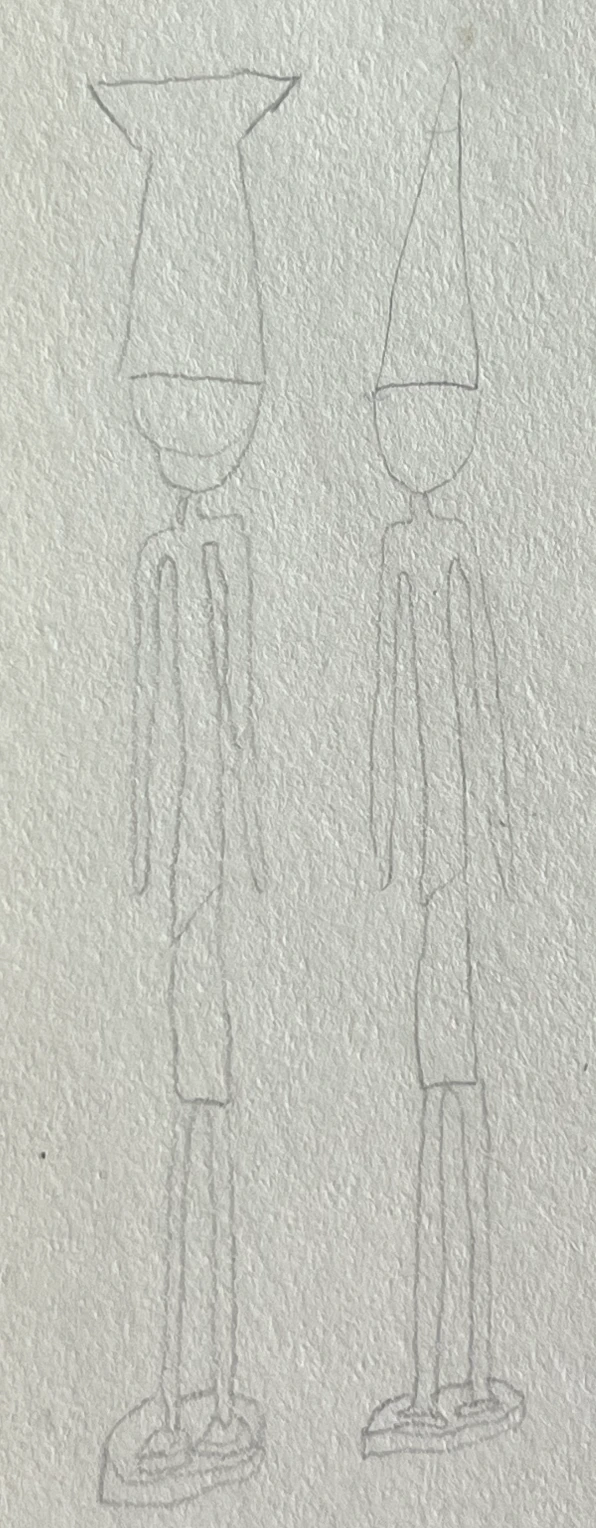
The drawings follow a deliberate reduction. A human outline becomes a vessel; headwear becomes a profile; a base becomes both a stabilizing element and the point where the object separates.
Heritage that
joins the table.
The project brief was to design a functional, 3D-printable object for the National Museum of Beirut’s shop: something that could connect Lebanese heritage with contemporary design and speak to both local visitors and tourists.
LITOS answers with a salt-and-pepper pair. The museum-shop context is the design brief; the project is presented here as an independent design proposal.
Identity can live
in a silhouette.
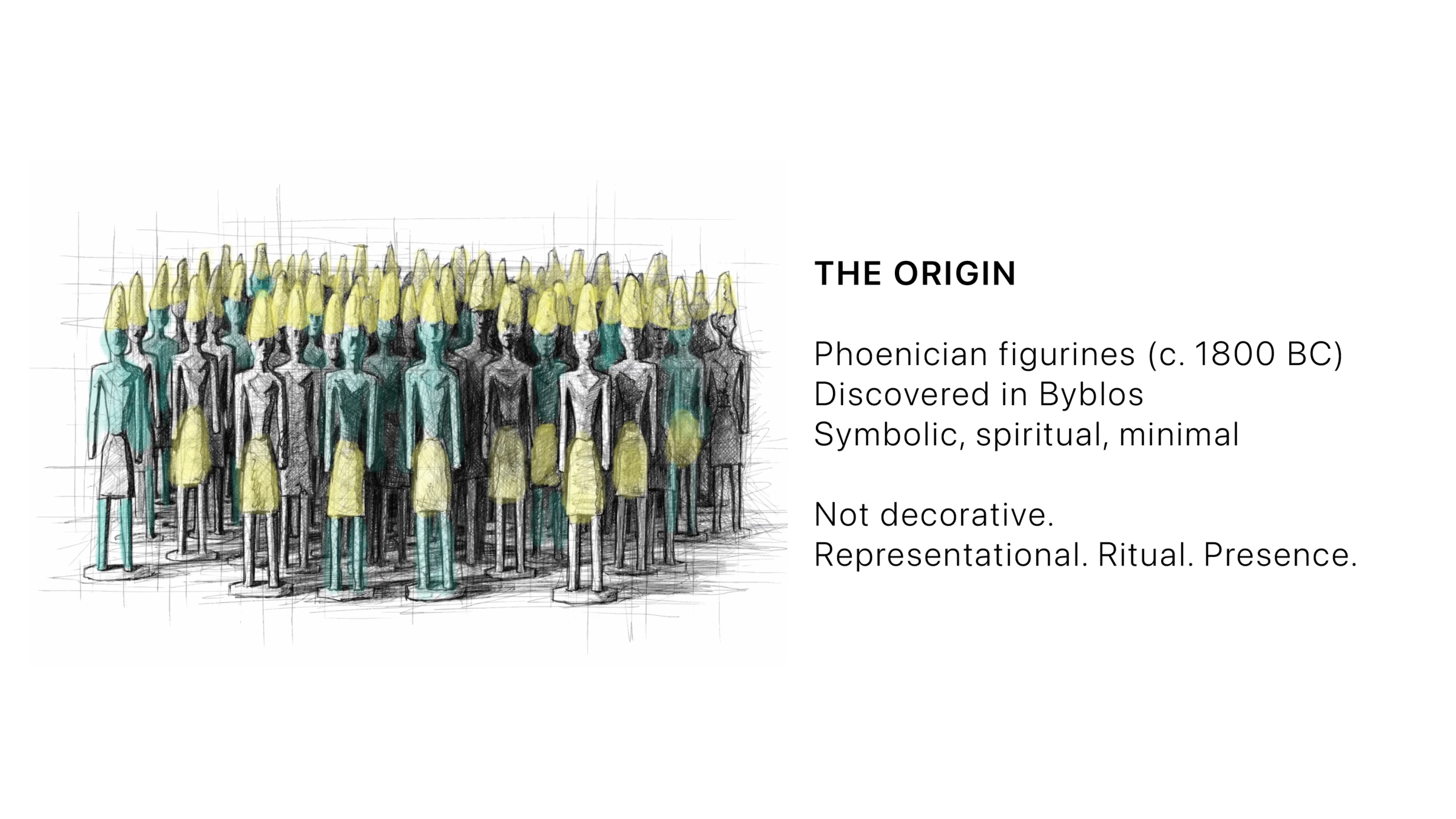
The research began with Phoenician figurines from Byblos. What mattered was their concentrated visual presence: a vertical body and distinctive headwear, recognizable without elaborate detail.
That observation became the design rule. Keep the identifying gesture; let the geometry become simple enough to hold, refill and print.
Same presence.
New purpose.
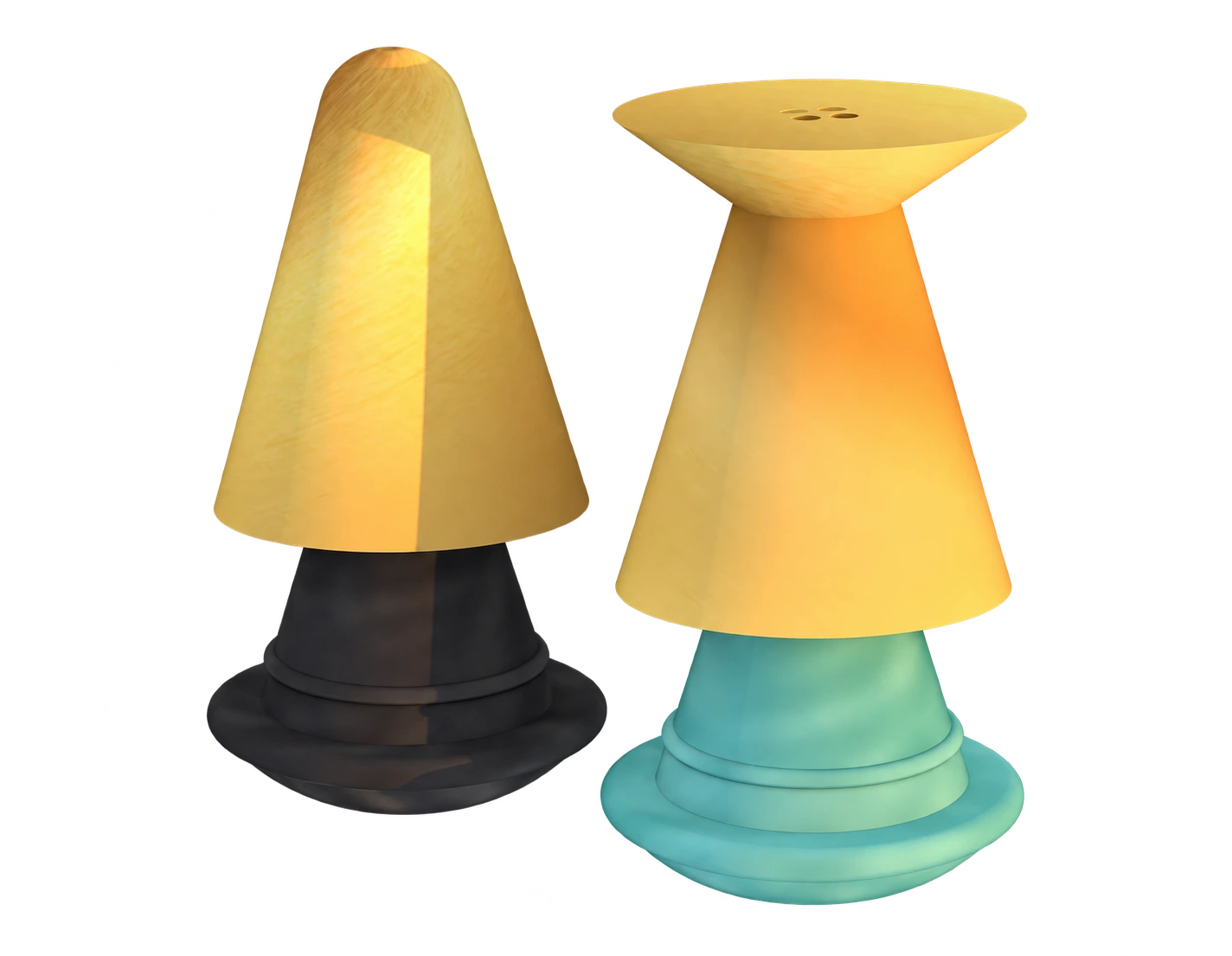
A stable lower body
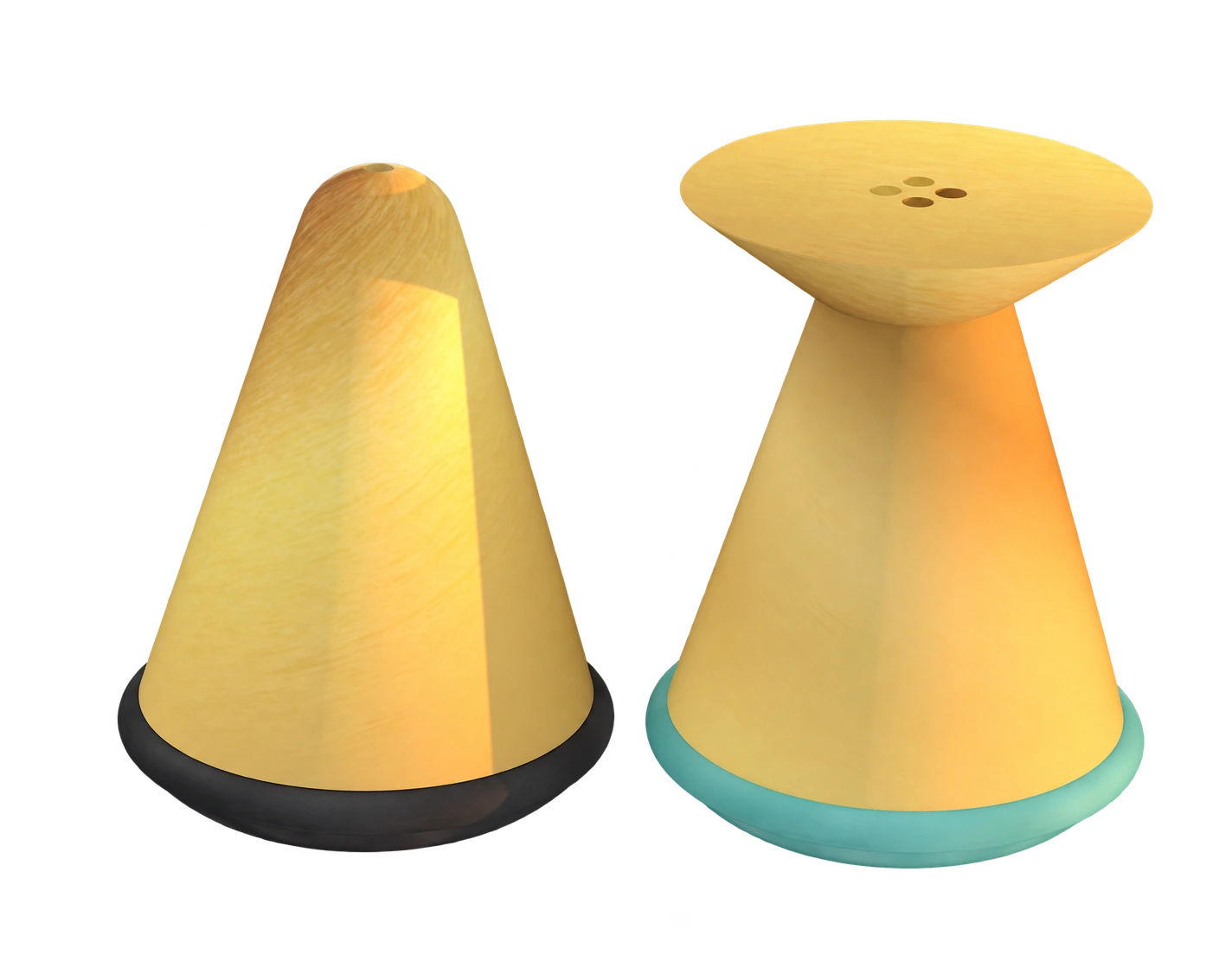
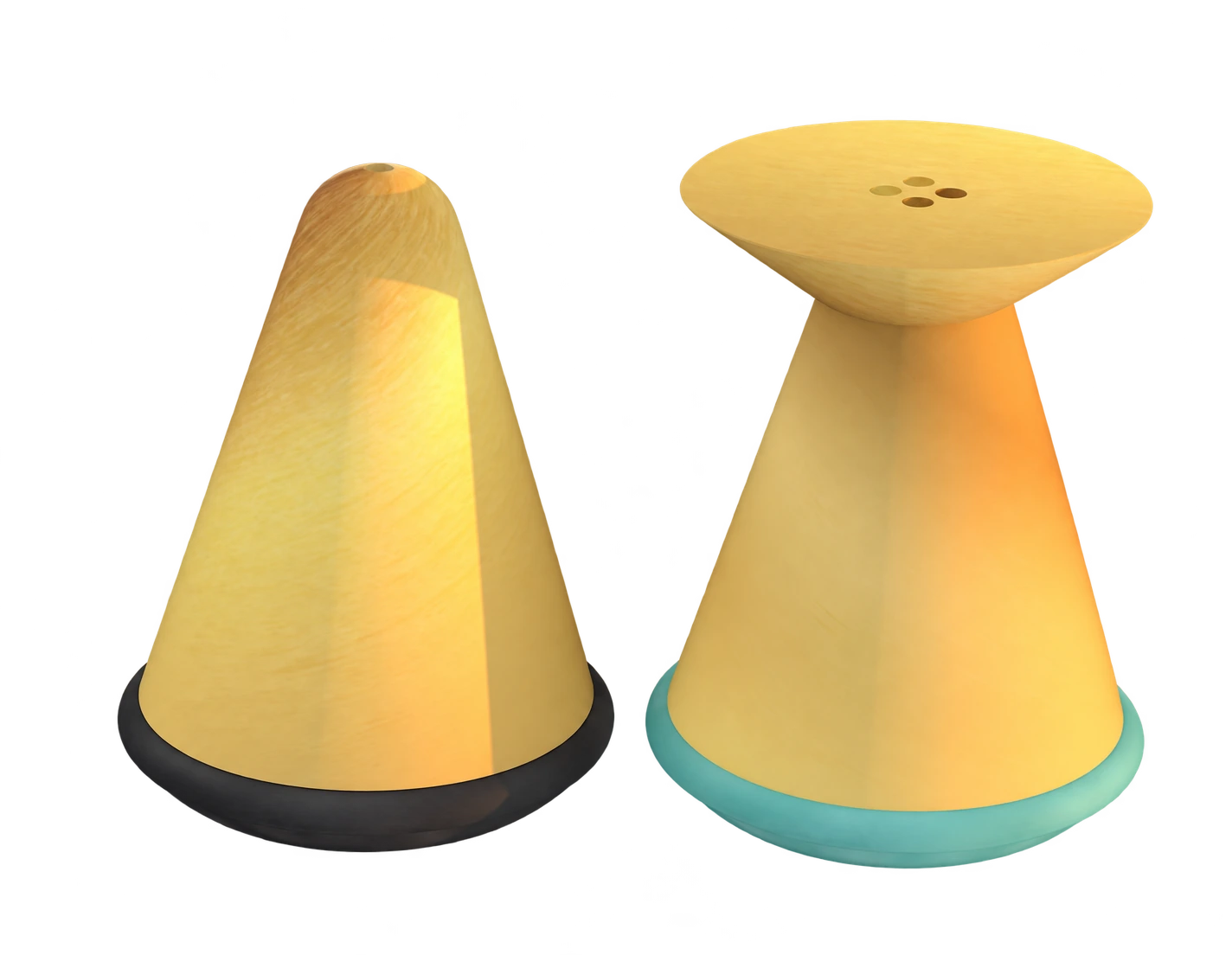
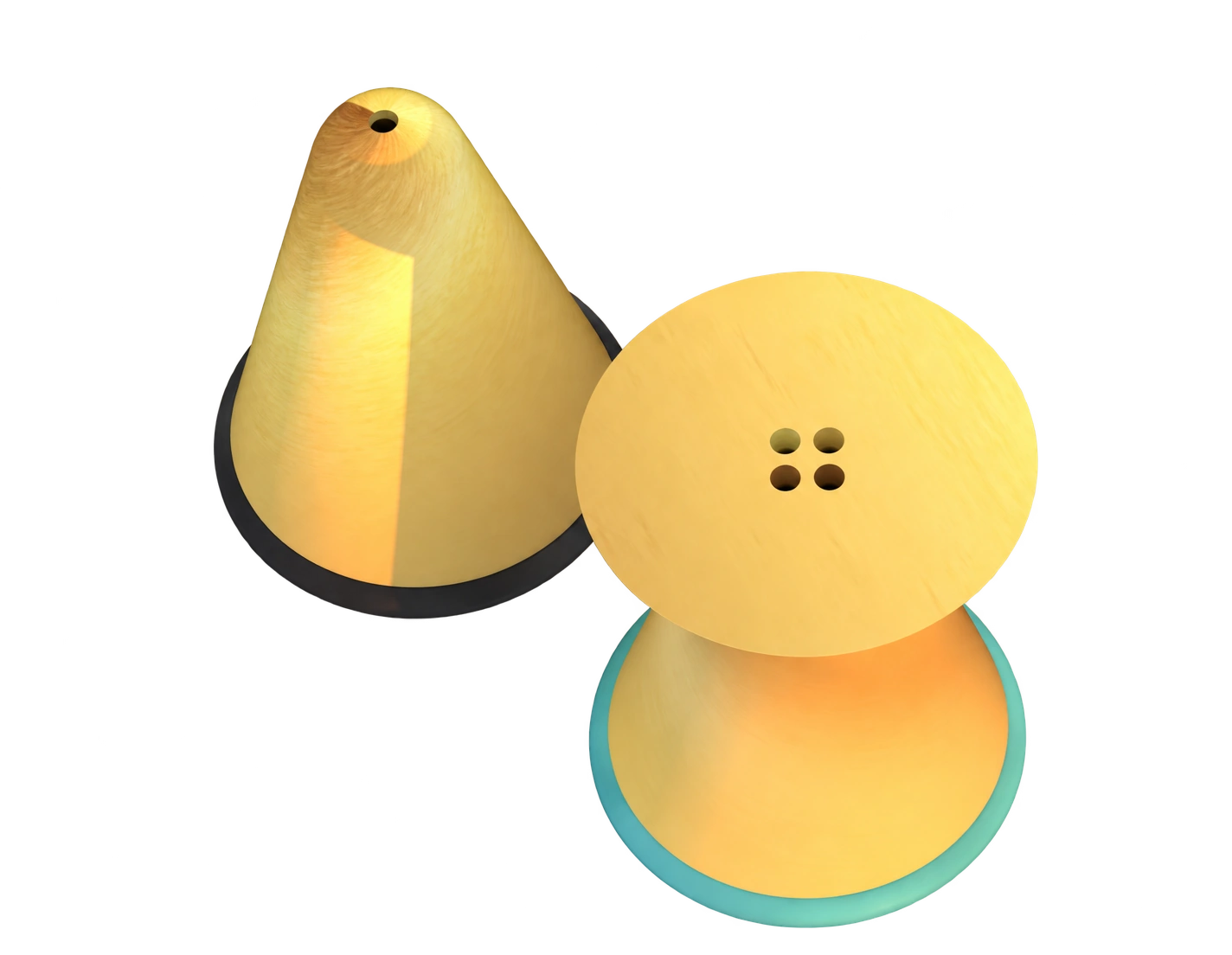
The bases ground the tall forms and distinguish the pair through color.
Two distinct crowns
One form tapers upward; the other opens into a shallow flare. Each remains legible as part of the family.
Function at the top
The dispensing openings complete the transition from symbolic figure to everyday shaker.
A digital process.
A tangible object.
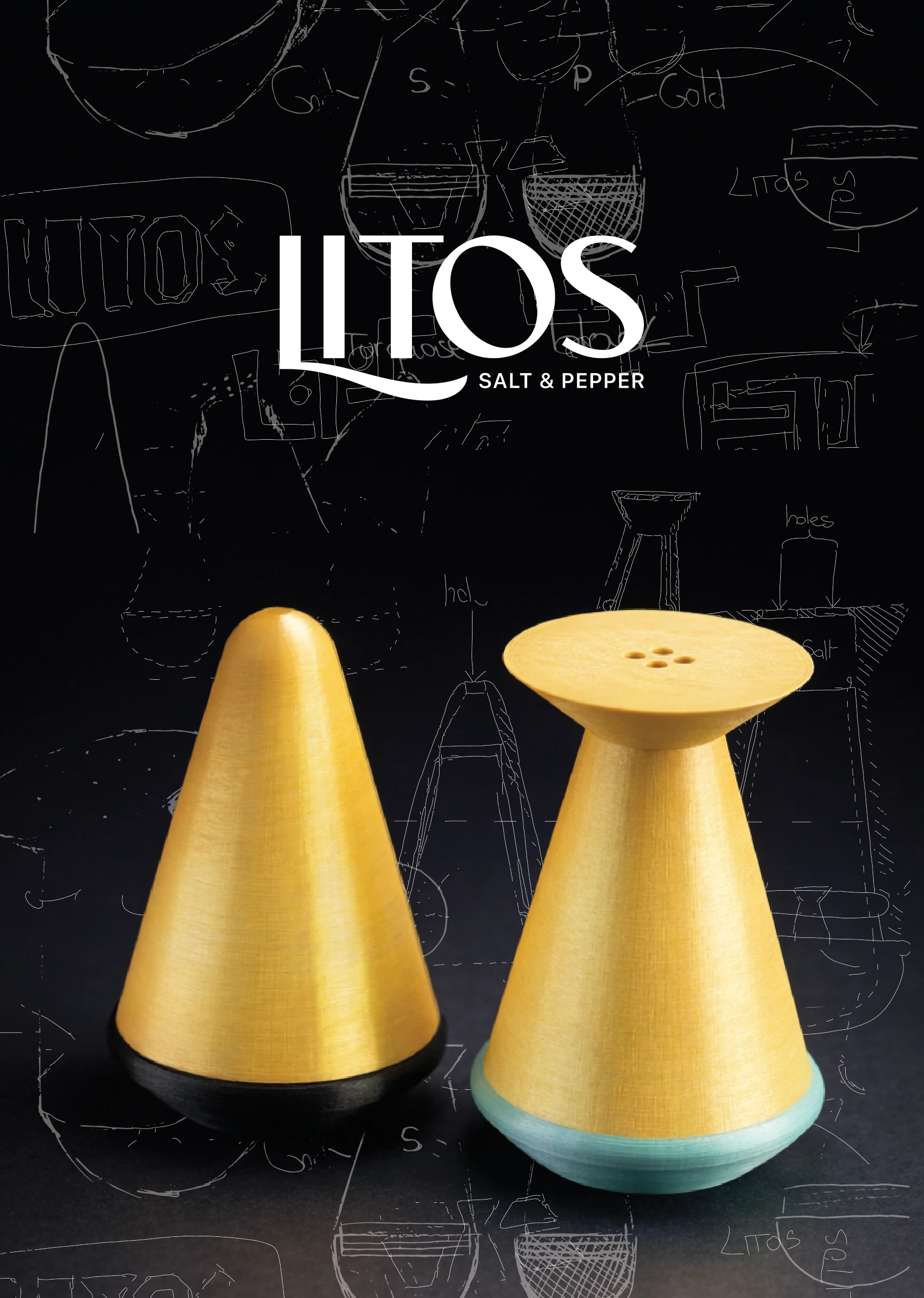
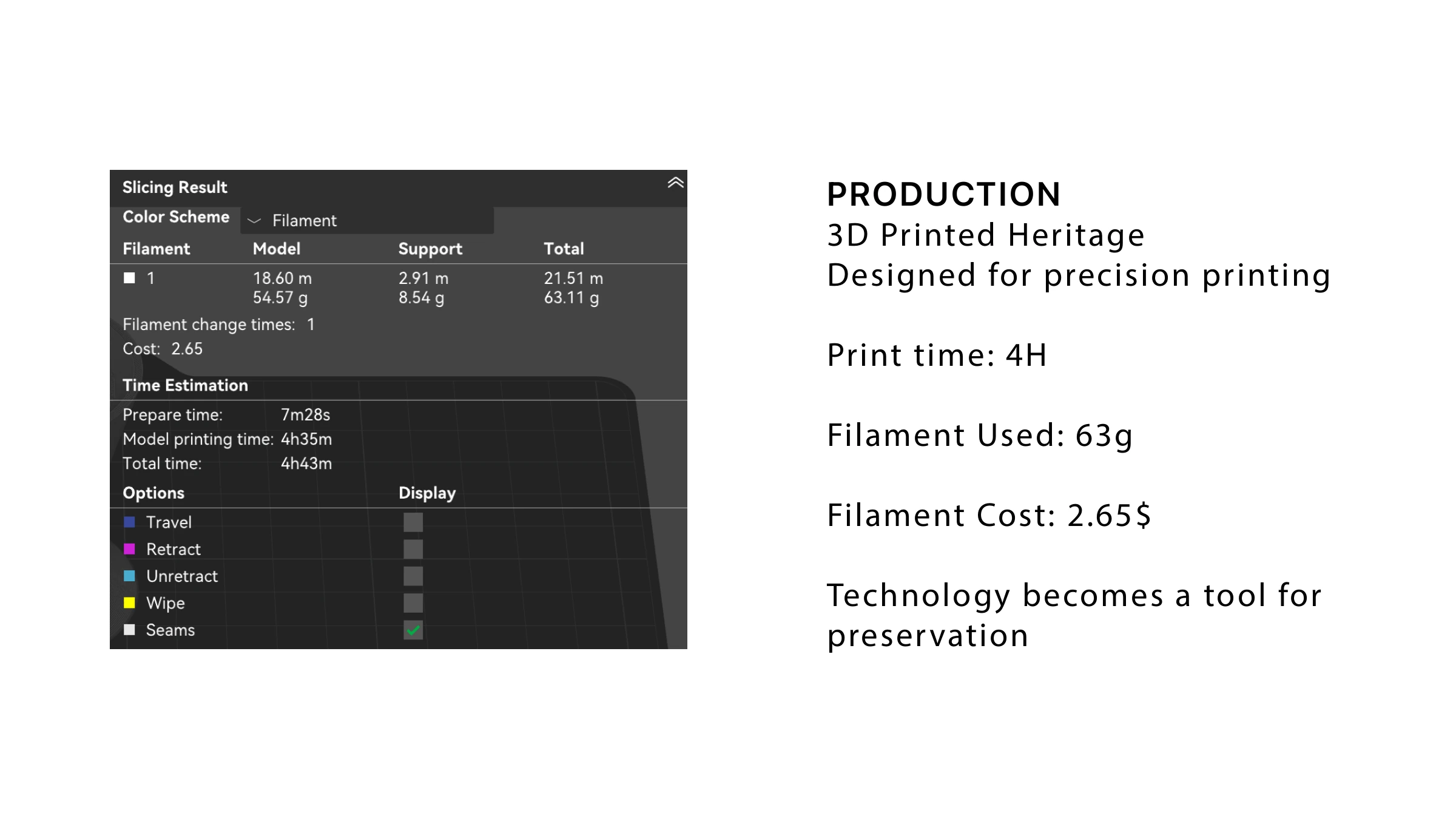
The project specifies TPU 95A and develops the forms for 3D printing. The archive includes closure trials, separate salt and pepper components, final print files and the printed pair shown in the poster.
The name LITOS is derived from lithos, stone. Its drawn wordmark gives the compact objects a second identity, carried into the final presentation.
History, within
everyday reach.
LITOS brings its reference into an ordinary domestic ritual. It preserves the relationship between two figures while giving them a useful place at the table.
The outcome is a developed pair of shakers, with form studies, print trials, a printed prototype and a complete project identity.