Measure
Start with the child or an object close at hand.
Measure, compare, discover… and grow. A colorful invitation to explore the size of the world.
Start with a small discovery ↓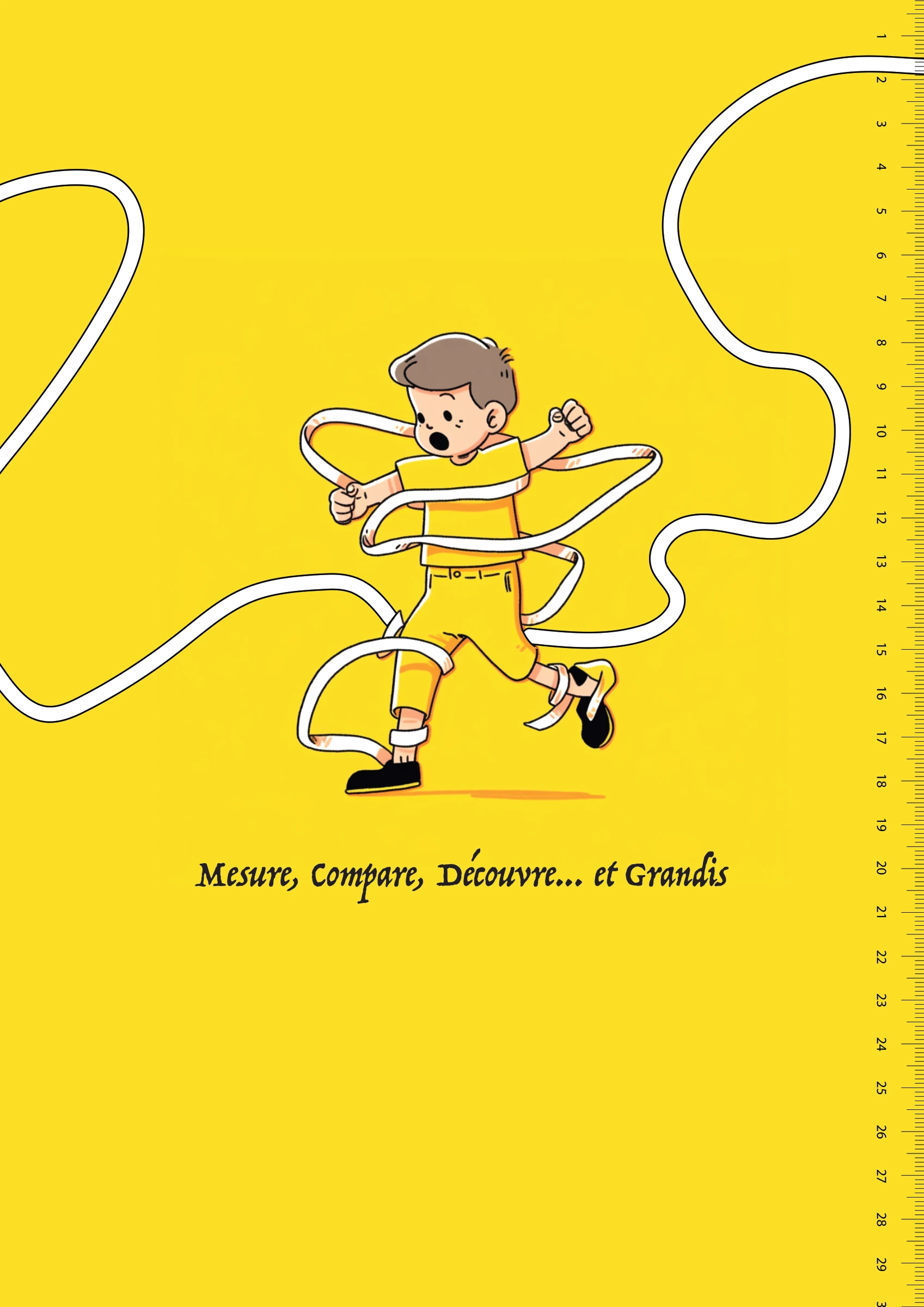
KidzMeter combines an illustrated measuring band with a French-language activity book. Together, they invite a child to measure what is nearby and compare it with familiar objects and animals.
The design turns an abstract unit into a visual relationship: something smaller, something bigger, something about the same size. The child’s own height becomes part of that exploration.
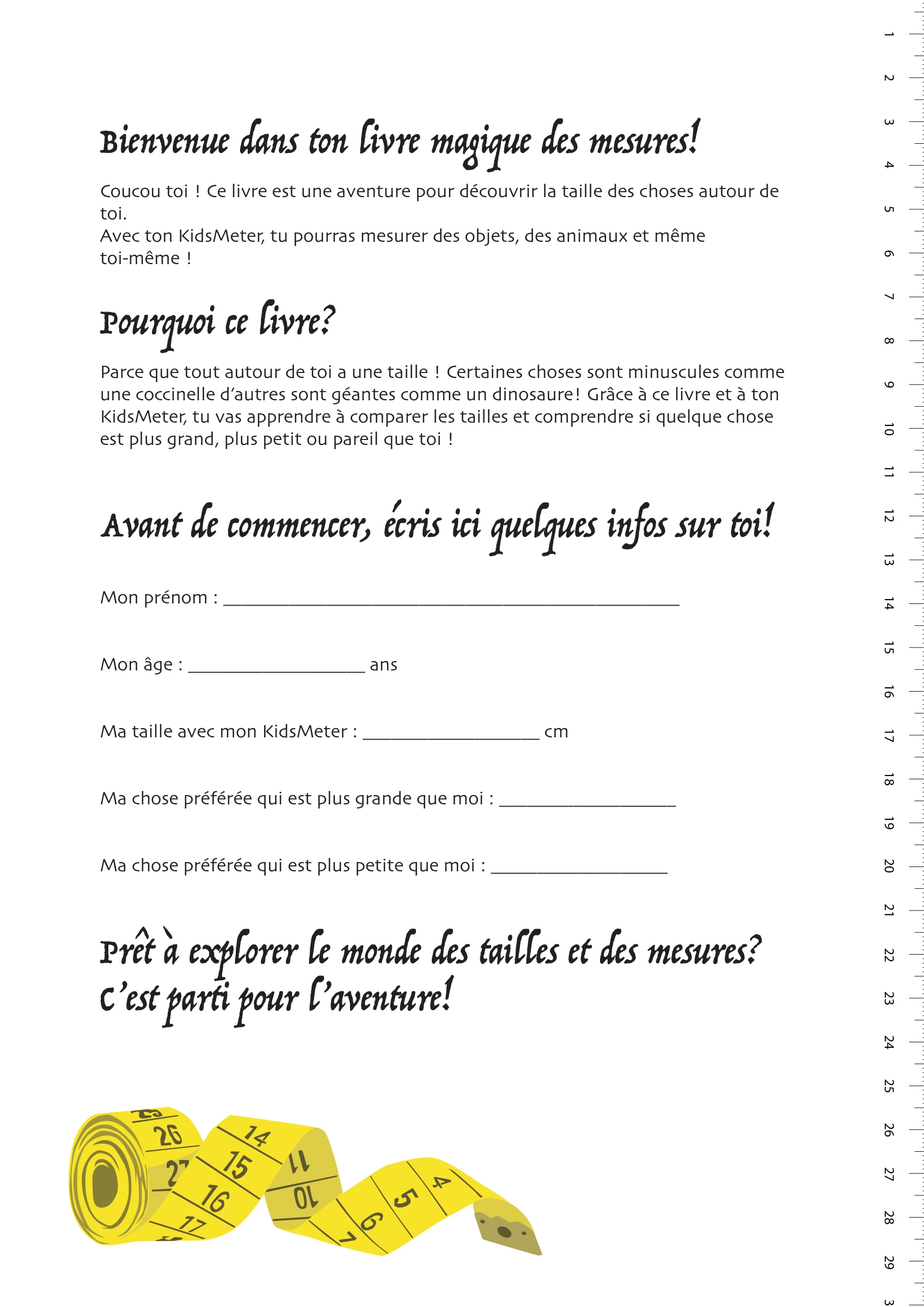
The opening page asks the reader to write their name, age and measured height, then name something larger and something smaller than themselves.
That introduction gives the book a personal starting point. Measuring becomes an activity the child performs, with space for their own answers.
Start with the child or an object close at hand.
Look for a familiar point of reference.
Move outward into larger and smaller scales.
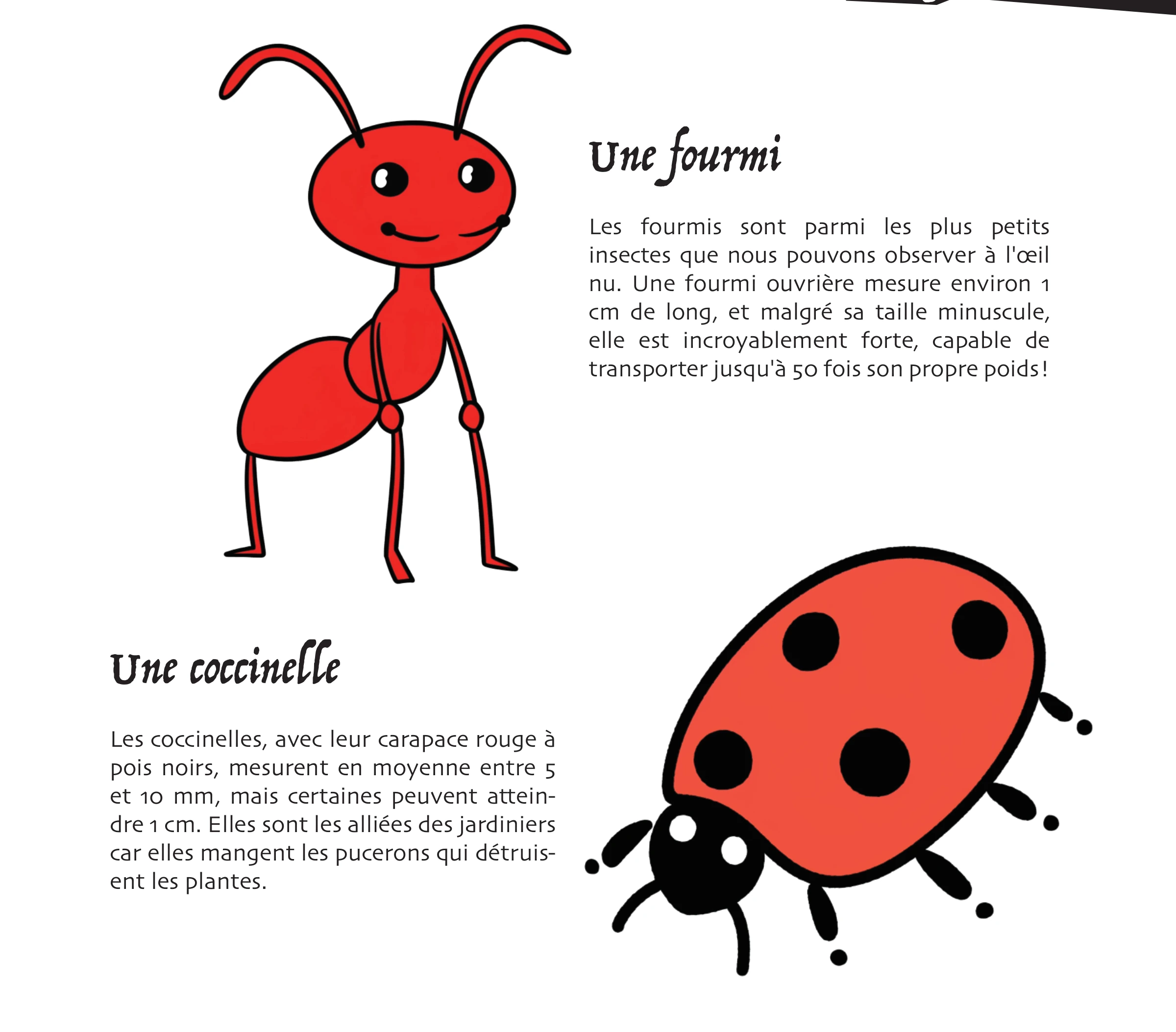
The workbook progresses from centimeters toward meters. A repeating page structure makes each new scale feel familiar: a measurement tab, two illustrated examples and short blocks of explanatory text.
The imagery shifts from tiny creatures and everyday food toward larger animals and vehicles. The design’s continuity lets the content change while keeping the reading rhythm clear.
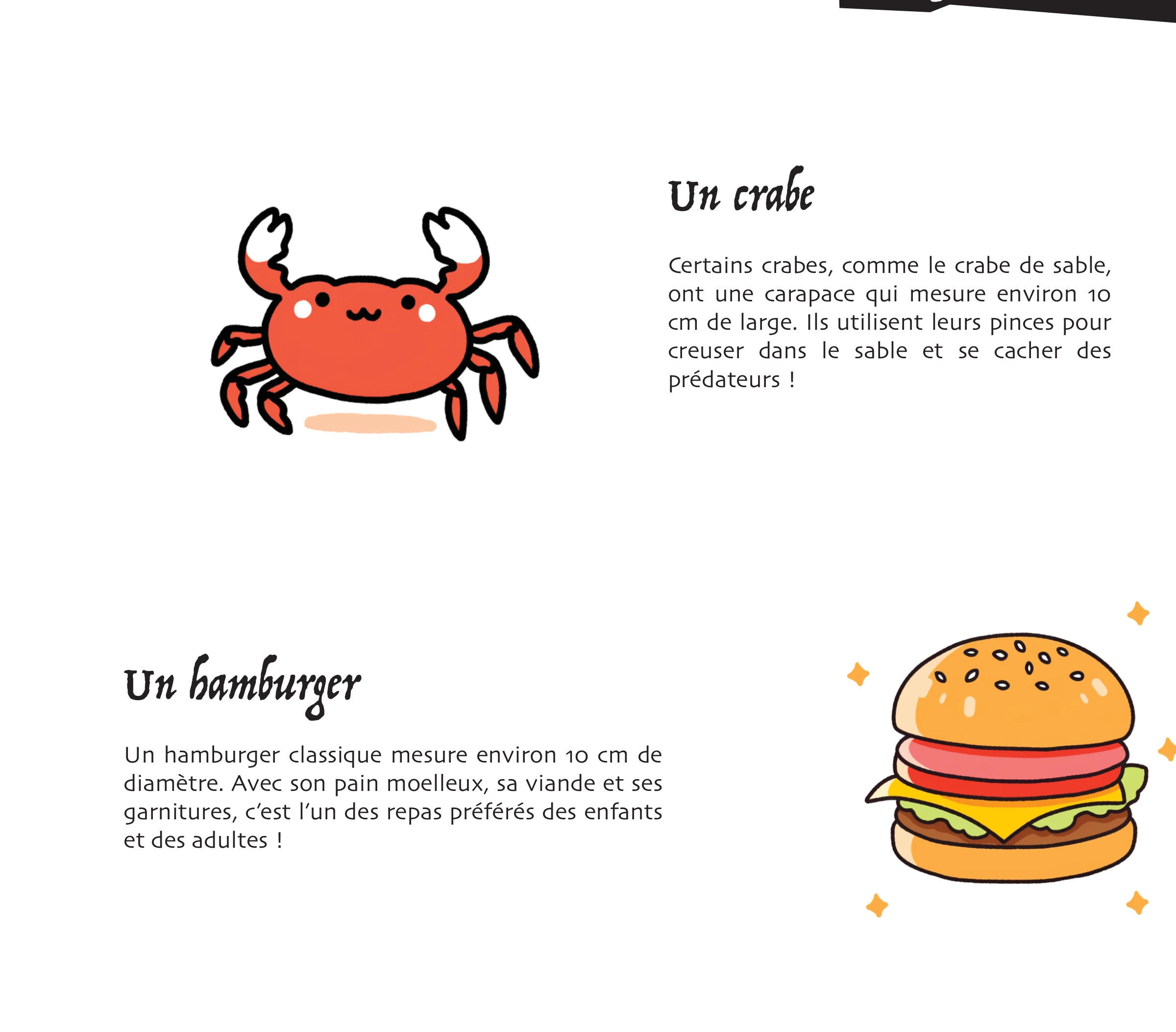
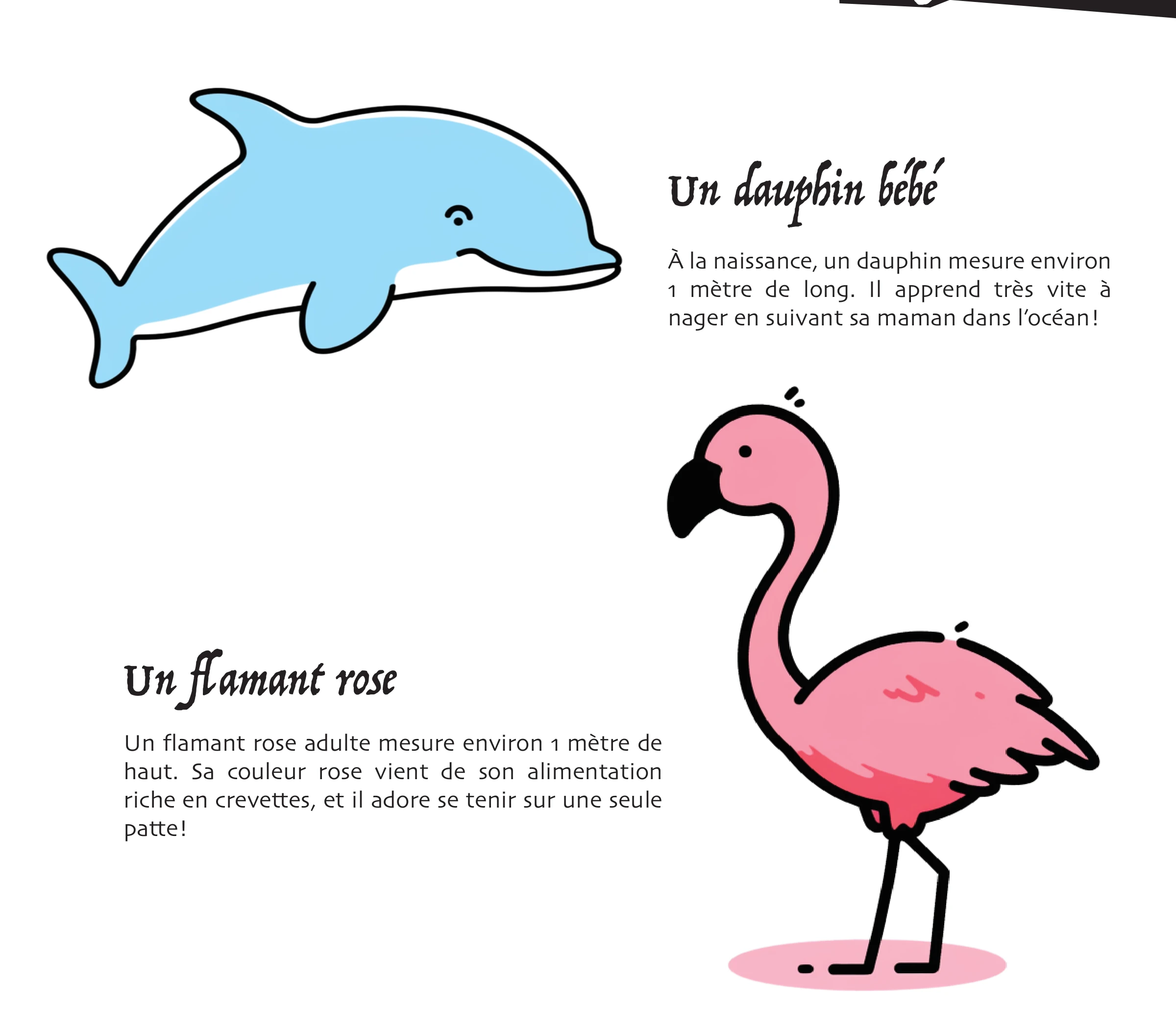
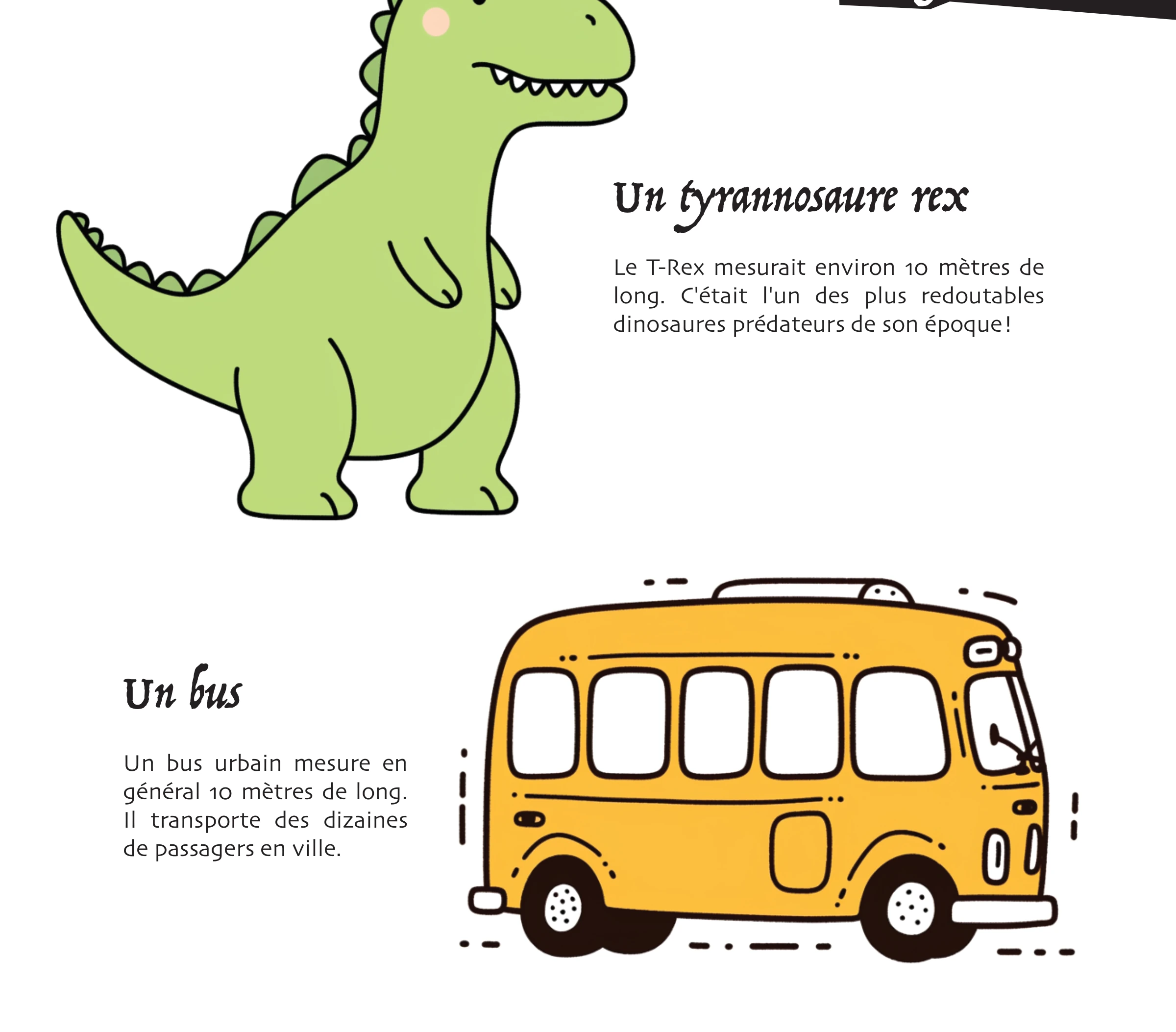
Selected excerpts show the original graphic concept. The workbook is presented as a design study, rather than a published reference edition.
The separate band extends the same idea into a continuous format. A sequence of colored blocks, animals and measuring marks gives the strip a strong visual rhythm.
Instead of turning pages, the reader follows the line. The band and workbook offer two ways to explore the same theme: one continuous, one chapter by chapter.

Complete illustrated face · original band artwork, with no missing panels. Open full artwork ↗ View the original reverse face ↗
Drag the artwork, use the mouse wheel, or move the slider. With the artwork focused, use Left / Right or Home / End. The slider follows the complete artwork; it is not a calibrated measurement.
Black outlines keep the illustrations readable. Bright, changing colors separate the scales. The tilted wordmark and playful cover establish a relaxed tone before the child reaches the first activity.
The system balances a repeating editorial structure with expressive illustrations. Its purpose is to keep the act of measuring approachable and visually engaging.
The project takes shape as a coordinated workbook and illustrated measuring band. The archive records the book layouts, the band artwork and the visual identity as a complete graphic concept.
At its center is one simple prompt: look around, make a comparison, and discover something through measuring.